
By: Keona Munowenyu
According to History, Black History Month was created in 1926 by “Carter G. Woodson, a noted African American historian, scholar, educator and publisher” who originally meant black history month to be a week. Black history month was chosen to begin in February because (as stated by USA Today) this was the month that “coincide with the birthdays of Frederick Douglass, a famed abolitionist who escaped from slavery, and President Abraham Lincoln, who formally abolished slavery.”
Kay Boatner from History explains that the month-long recognition of black history was created in 1976 when U.S. president Gerald Ford extended the recognition to “honour the too-often neglected accomplishments of Black Americans in every area of endeavour throughout our history.”
So, in honor of the accomplishments of Black people in this country, Sheyenne Mustang Media has composed a list of people of color who have paved the way and deserve to be recognized this month for their perseverance and excellence.
Literary and Film
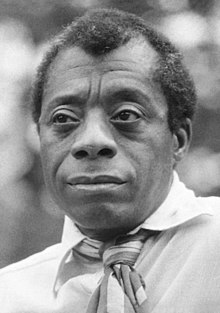
The Biography states it best when they write that James Baldwin is “One of the 20th century’s greatest writers” and “broke new literary ground with the exploration of racial and social issues in his many works.”
Britannica writes that Baldwin was an “American essayist, novelist, and playwright whose eloquence and passion on the subject of race in America made him an important voice, particularly in the late 1950s and early 1960s, in the United States and, later, through much of western Europe.”
Making history and paving way for important conversions to be held according to Britannica “his second novel, Giovanni’s Room (1956), deals with the white world and concerns an American in Paris torn between his love for a man and his love for a woman.” Highlighting the importance of such a novel The Biography states Baldwin’s novel Giovanni’s Room “broke new ground for its complex depiction of homosexuality, a then-taboo subject.” According to the Biography “his words struck a chord with the American people, and The Fire Next Time sold more than a million copies.”
Britiannica writes that The Fire Next Time was composed of “two previously published essays in letter form by James Baldwin” and in these essays Baldwin wrote “warned that, if white America did not change its attitudes and policies toward black Americans and alter the conditions under which blacks were forced to live, violence would result.” Biography writes that this statement from Baldwin was not unwarranted he had witnessed so much violence “especially the assassinations of Evers, Malcolm X and Martin Luther King Jr. — caused by racial hatred.”

Variety writes that this incredible woman “has built a brand with smart storytelling infused with contemporary issues and often a social justice lens.” According to this article “DuVernay’s ARRAY banner produces a number of drama series through its pact with Warner Bros. TV, including OWN dramas “Queen Sugar” and “Cherish the Day.”
Kerri Alexander from Women’s History finds that despite not picking “ up a camera until she was thirty-two, Ava DuVernay has made history as a writer, director, and producer.” This article from Women’s History continues to write that Ava DuVernay “was the first African American woman to win Best Director at the Sundance Film Festival, be nominated for a Best Director Golden Globe, direct a film nominated for a Best Picture Oscar, and direct a film with a budget over $100 million.”
Her project When They See Us according to this article “was nominated for 16 Emmy awards, making her and Beyoncé the first African American women in Primetime Emmy history to receive multiple nominations in their careers for directing.” DuVernay is nothing but a visionary for the new age of film and tv.
This article from Women’s History writes towards the end that “in 2010, she started her own film distribution company called African-American Film Festival Releasing Movement (AFFRM) but rebranded the company in 2015 under the name ARRAY to focus on racial and gender inclusion in filmmaking.” The tv and film industry should personally be thankful that DuVernay is doing the great
Activist

In 1955 Claudette Colvin‘s at only 15 years old attending a high school in Montgomery, Alabama, had first observed Negro History Week and felt encouraged enough to act on her fundamental right to freedom.
According to Hadley Meares from History “on March 2, 1955, when she boarded a bus in downtown Montgomery. She and three other Black students were told to give up their seats for a white woman.” Strengthened by the lessons Negro History Week taught Colvin refused to get up. “My head was just too full of Black history,” she stated in an interview with NPR. “It felt like Sojourner Truth was on one side pushing me down, and Harriet Tubman was on the other side of me pushing me down. I couldn’t get up.”
The article continues to state that Colvin was arrested and put on indefinite probation and despite this act of bravery taking place nine months before Rosa Park’s similar act of bravery the “NAACP chose to use the 42-year-old civil rights activist as the public face of the Montgomery bus boycott, as they believed an unwed mother—Colvin became pregnant when she was 16—would not be the best face for the movement”

Gwen Aviles and Ariel Jao from NBC News share that “Longtime activist Phill Wilson has spent four decades fighting HIV/AIDS in Black communities.”
In 1983 the article continues to write that during the height of the HIV and Aids epidemic in the United States Wilson’s then-partner Chris Brownlie found out he had contracted HIV, a disease he would later die from. At the time the American public ignorantly believed this was a disease that only affected white gay men.
Wilson commented that “Black people were always disproportionately impacted, over-represented in disease, underrepresented in advocacy, underrepresented in resources dedicated to fighting the disease.”
Founder of the Black AIDS Institute in 1999 Wilson has worked tirelessly since then to educate Black communities about AIDS and increase their access to necessary antiviral treatments necessary to combat this disease.

According to Hadley Meares from History “The writings of The Rev. Dr. Anna Pauline “Pauli” Murray were a cornerstone of Brown v. Board of Education of Topeka, the 1954 Supreme Court case that ended school segregation.”
This woman really did the most for her community, as a lawyer, Episcopal priest, civil rights activist and co-founder of the National Organization for Women. A fighter for women rights Murray the article continues to state “In 1965, Murray and Mary O. Eastwood co-authored the essay “Jane Crow and the Law,” which argued that the Equal Protection Clause in the 14th Amendment should be applied to sex discrimination as well”
Entertainment
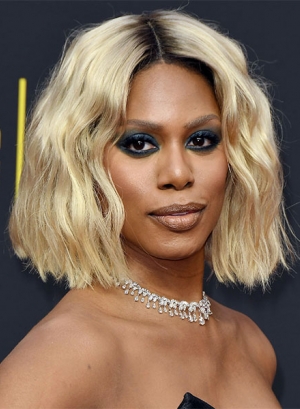
Laverne Cox, best known for her role as Sophia Burset on Netflix’s Orange Is the New Black has according to Irina Gonzalez from Oprah Daily “opened doors for LGBTQ folks not only in Hollywood but across the globe.” ‘
She became the first transgender to ever be nominated for acting at the Primetime Emmys in 2014. Her reach in the media has been vastly expanding and making a major difference.
Already according to this article she has the title of being the “first transgender person to appear in Times Magazine in a story titled, “The Transgender Tipping Point.” That story revealed Cox’s childhood how she came to realize how she might be transgender and what that realization meant for the rest of her life.
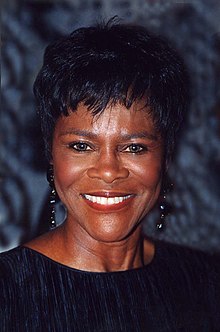
This American Actor truly did pave a way for many black female actors to come. According to Erin Kaplan from Politico, she was first discovered by Ebony Magazine to become a model Cicely Tyson didn’t become an actor till 1951 when she took “roles on soap operas and films.”
Her career that spanned 60 years included memorable roles such as Binta in Roots, a limited series that captured the narrative of many African slaves and their families, and the character Constantine Bates in The Help a movie and book focusing on the perspective of black maids on white families.
Overall due to Cicely Tyson’s enduring work not only has she been awarded a Tony Award, Screen Actors Guild Award, and even a Primetime Emmy award for Actress of the Year but, this phenomenal actor has been given the Presidential Medal of Freedom as well.
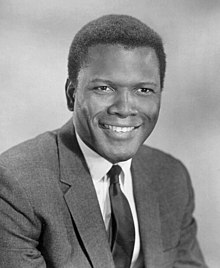
This elegant man according to Brandon Griggs from CNN is “Hollywood’s first Black movie star and the first Black man to win the best actor Oscar.” His desire to play roles other than just the servant in the 1950s to 1960s gave way for people to realize black people could perform other roles as well such as doctors, teachers and detectives.
The pressure as an only black Hollywood Actor was immense. “It’s been an enormous responsibility,” Poitier told Oprah Winfrey in 2000. “And I accepted it, and I lived in a way that showed how I respected that responsibility. I had to. In order for others to come behind me, there were certain things I had to do.”
He took this responsibility well and would not take characters he thought were one-dimensional stereotypes of black people. It’s because of how he desired to be portrayed that black men and women today have greater opportunities in Hollywood and to see themselves represented accurately.
Science
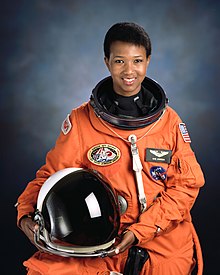
Space travel is cool but what’s even cooler is that Mae Carol Jemison was the very first black woman to travel in space. Mae Carol Jemison is not only a NASA astronaut but she also claims the title of doctor and engineer as well. The mere fact that Dr. Jemision is no easy accomplishment.
Kerri Alexander from Women’s History finds that when Jemison applied to the astronaut program at NASA in 1987 she was “one of the 15 people chosen out of over 2,000 applications.” Alexander continues to provide information on how on September 12, 1992, Dr. Jemison and six other astronauts went into space on the space shuttle Endeavor. This voyage made Jemison the first Black woman in space and forever broke away for other children of color to dream that they too could work with NASA and even travel space if they desired to.
For her many accomplishments, Dr. Jemison has earned the following honors including the National Organization for Women’s Intrepid Award, Kilby Science Award, and she has been inducted into the National Women’s Hall of Fame, National Medical Association Hall of Fame and Texas Science Hall of Fame.
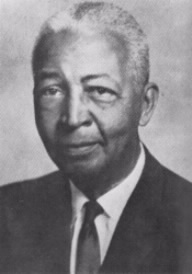
The many efficient ways we preserve food can be thanked by Mr. Hall in particular for his discoveries in this area.
As stated by the ASC organization “Before his research, most preservation was done with salts and it was difficult to keep foods from spoiling without making them taste bitter.”
To address this issue Mr. Hall this article continues by saying he “created a system to sterilize spices by using ethylene gas in a vacuum chamber” a system “that was later adapted by the food, drug, and cosmetic industries.”
His vision for food preservation is still in use today so if you’ve ever wondered why your meat can last in the fridge for longer than a week you can thank him.
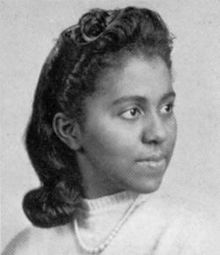
This woman who embodies the word grit graduated with a Ph.D. from Columbia University in 1947 and became according to the Science History Insitute “the first African American woman to obtain a Ph.D. in chemistry in the United States.
Caldwell devoted much of her career to research on the nature and action of amylases or starch-splitting enzymes. In 1960, the American Chemical Society awarded her the Garvin Medal for her work.”
To pay it back and encourage more black children like herself to pursue careers in science and medicine Marie Maynard Daly put it upon herself to create programs to encourage the number of minorities in those programs and according to this article “in 1988, she established a scholarship fund at Queens College for African Americans in commemoration of her father” who also wished to pursue a career in chemistry similar to that of his daughter.
Sports

Wilma Glodean Rudolph did not always get a running start growing up. In fact, Britannica reveals that “Rudolph was sickly as a child and could not walk without an orthopedic shoe until she was 11 years old.”
This article continues to say that she was a self-determined young lady though and during the 1960 Olympic games she accomplished multiple gold medals in the 100-meter race, 200-meter dash, and the 4 × 100-metre relay team, “which had set a world record of 44.4 seconds in a semifinal race.”
After she retired from running Britannica concludes that Rudolph encouraged young runners and “was an assistant director for a youth foundation in Chicago during the 1960s to develop girls’ track-and-field teams, and thereafter she promoted running nationally.”

In 1968 the US Open was won by Arthur Ashe a man who lived as an ambassador of equality and goodwill. International Tennis Hall of Fame writes that “As he rose from segregation and racial roadblocks to becoming the first African-American male to win the US Open (1968), Australian Open (1970), and Wimbledon (1975).
In 1963 he was the first African-American chosen to play Davis Cup for the United States, and in ten years representing his country, helped the US win five championships (1963, 1968, 1969, 1970, 1978).” Though it’s worthy to mention all his incredible accomplishments as a professional tennis player he was so much more than who he was on the court.
The article continued to say Arthur Ashe “was an activist, author, educator, and a tireless campaigner for civil rights and racial equality, not only in the United States but worldwide, particularly against the apartheid systems of South Africa.”
International Tennis Hall of Fame applauded him as a man of many solid principles and strengths but one of his greatest honors “in 1993 when he was posthumously awarded the Presidential Medal of Freedom by President Bill Clinton.”
 The Mustang Post