
By Carter M. Phillips
“You’re funny. You don’t talk like a kid. You sound like a man who’s run out of his days, who understands everything,” Spoke Odile into a portrait of existence.
Right now, this script is just a blank canvas, waiting to be caught between light and movement.
A voice will call out, the aperture will shrink and white will evaporate into a rainbow spectrum of shades.
I typed rapidly but with thought.
That was Odile, an intelligent girl who’s stuck between tragedies, and however hard she tries, is unable to prevent the next.
Odile doesn’t exist. I made her up.
She’s just a concept. But through cinema, her illusion will become complete.
As I write this screenplay, I constantly wonder what the right step is. No matter how much technique and experience is applied, a film is nothing without its audience.
I constantly wonder what makes a good movie.
Having seen many of the great acclaimed movies from new Hollywood, classic Hollywood, and international cinema, I should understand what makes a great film, but that’s not the case. Capturing true greatness is elusive like lightning in a bottle.
“Find a role that nobody wants to do and do it better than anybody else,” The great silent actor Lon Chaney had said to William Henry Pratt; stage name: Boris Karloff.
He was talking about acting, but it’s advice that works for any field of art.
Greatness lies in innovation and individuality.
All of the great directors I have mentioned have distinctive styles.
Alfred Hitchcock and Dario Argento have similar styles; however, they are different.
Citizen Kane is a film that was on a different spectrum than any other being made in 1941 because it didn’t adhere to the rules of the game.
That movie also has a heart.
Its emotional complexity changes each time you enter a new stage of life, making it fresh in an everlasting way.
“We believe lie more than truth,” Romero says as I type his dialogue, fooling myself into thinking I’m an intellectual.
It really doesn’t matter though; the words serve no meaning.
They flavor a film but what matters is the visuals. A story should be told by them.
The point of cinema is that you see it, so although sound design is important, it should not overshadow what appears on the screen.
Greatness lies in the world of a film, which would bind life with wisdom and feeling.
In the way that Bob Dylan spells out a human soul with structured rhymes and that John Steinbeck wrote little American stories with thought on print, a great filmmaker must learn to do with visuals.
“There’s a way that the force of disappointment can be alchemized into something that will paradoxically renew you,” Martin Scorsese said that.
“If a picture is worth a thousand words, then cinema must be worth a million,” I said that.
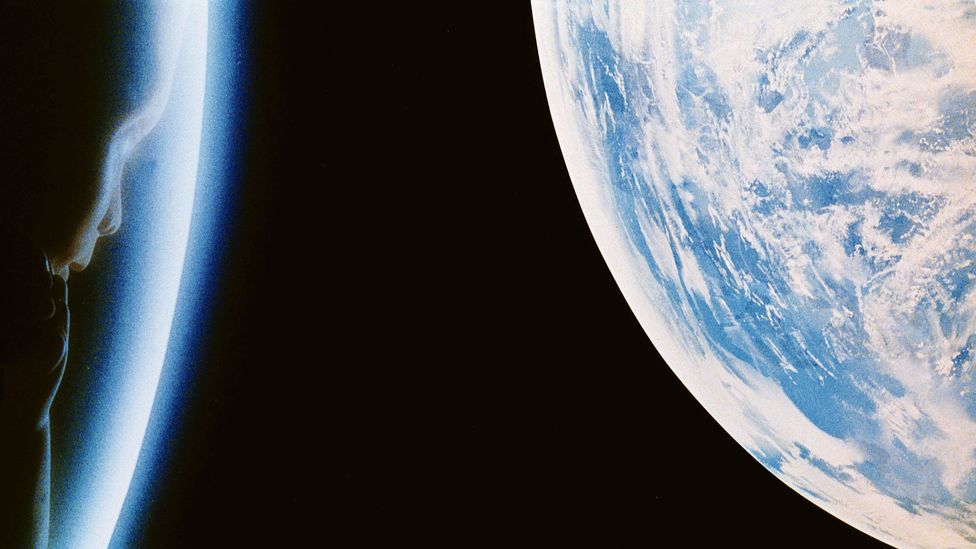
From Back to the Future to Blade Runner, all films about people are in some way about the human condition. It is considerably harder to make a great film with dull characters. Even in Kubrick’s 2001: A Space Odyssey, a film known for hypnotic visuals and lacking character development, Hal-1,000 is a notably interesting character which questions the conscience experience and ethics.
Very few films rely on blank characters, who’s function is not for the audience to relate to them.
The gangster film is worthwhile for understanding how to make an audience root for a character.
Take either the 1932 or 1983 versions of Scarface and consider why people root for these characters even after they do terrible things.
Firstly, they are living life on the ritz, they have what we want.
More importantly, they came from a damned world, and so violence feels justified, especially when it comes from a double-crossing bad guy or unnamed gunman.
When a gangster feels remorse, it gives us more reason to like them.
Scarface is a character with a moral code throughout most of both films which gives him humanity.
There comes a point in both films when greed overtakes Scarface and he no longer earns sympathy however, like in Vertigo, the first two Godfather films and Citizen Kane, he is still interesting and so the audience remains captivated by the film.
When writing characters, I always put a little bit of myself in them because if part of them is genuine then they will feel believable.
Drama has to do with conflict and conflict is spurred by two things: Emotion and intelligence.
A screenwriter or director shouldn’t underestimate the intelligence of the people watching they’re film.
The average person of both professions has average intelligence, and they are making the movie for somebody with average intelligence, so why then would they treat they’re audience as if they have a below average IQ?
Making characters do unrealistic decisions or having pathetic ‘movie magic’ moments that make no sense feels lazy.
Everything in a film should have a reason for being there, make sense thematically and serve the narrative.
A good way to better understand good choices from wrong is to watch more movies. Watch highly acclaimed movies (look through the Criterion Collections catalogue of films to start). Explore new areas of cinema. Be open to anything. You can learn from bad movies, so that you don’t make the same mistake as the filmmakers before you. Think, “Why didn’t I like this and why did I like this?”
Because everything is influenced by something else, if we go all the way back to the origin of story, we’d find that fiction was inspired by probability and dreams.

The state of the world, the past, the people a person knows, what somebody studies, and the books a person reads can influence a film.
Remember that everything serves the story. All things need to have a purpose for being there
How can one encapsulate a feeling that remains with oneself after experiencing a masterpiece? That is the challenge I have given myself.
To show beauty and people, your perspective, your thoughts and opinions, your hopes and dreams.
Regardless of what you make, create something your proud of, which you want to be part of.
Make it uniquely your own. That is where you will create something memorable.
Even if your movie is lost in the backroads of time and space, damned to the obscure, it will always be there, like words of a poet.
 The Mustang Post