
By Ashleigh Varing
Last month we looked at K-pop’s rise to fame not only in South Korea, but internationally as well, and why so many have taken to the community. BTS was a huge help in this popularity surge, but how did they become the powerhouses in the industry that they are today?

It all started with Kim Namjoon. At thirteen, he became an underground rapper, his prominence within the community growing over time. He was invited to audition for an underground hip-hop agency, and one of the judges (Sleepy from the rap duo Untouchable) was so impressed with Namjoon’s skills that he referred him to Bang Si-hyuk, the CEO of Big Hit Entertainment. Namjoon ended up auditioning for the company, becoming the first member of BTS.
The second member to join was Min Yoongi, who was active as a rapper and producer under the name ‘Gloss.’ He had made a name for himself as a member of a group titled “D-TOWN” (named for the city, Daegu, where the group originated). At seventeen years old, he tried out for Big Hit Entertainment after seeing a poster advertising the auditions. He ended up getting second place and joined the agency as a producer. He was later “tricked” into joining BTS, becoming the group’s second member.
Jung Hoseok, despite being one of BTS’ rappers, wasn’t in the underground hip-hop scene like Namjoon or Yoongi. In fact, he was a street dancer in a dance team called Neuron. He auditioned for one of the largest companies in K-pop, JYP Entertainment, though he was rejected and later decided to give Big Hit a chance. He had plenty of potential, so Si-hyuk didn’t hesitate to accept him into the agency as a trainee. He almost wasn’t included in BTS’ lineup, though Namjoon convinced the company that the group needed him, and so he became the group’s third member.
Kim Seokjin, the band’s fourth addition, wasn’t planning to have a career in music at all; he was an acting major with no experience in singing, rapping, or dancing. A Big Hit representative saw him exiting a bus and persuaded him to sign on with the label, and through eight months of hard work and dedication, Seokjin managed to perfect the pristine vocals he’s known for.
Jeon Jungkook, the youngest member of the band, was only thirteen when he auditioned for a show called “Superstar K” in his hometown of Busan. He was eliminated from the competition, though seven agencies scouted him in hopes of signing him to their label, one being JYP Entertainment. Why, then, did Jungkook turn down most of those offers and choose to sign with Big Hit? Well, as said by Jungkook himself, “I thought Namjoon was so cool, so I wanted to sign with them. I told my parents that I wanted to join, and so I signed.”
Kim Taehyung, the sixth member to join the group, came to the auditions in Daegu to support a friend of his. He didn’t plan on auditioning, though a staff member encouraged him to try out, so he got permission from his father and auditioned on the spot. He passed the audition and was welcomed into the company, though he was kept a secret until eleven days prior to their debut.
Park Jimin was encouraged by his dance teacher to audition for Big Hit due to his raw talent, and he passed. He became a trainee, though he was nearly kicked out about eight times due to several people thinking he would do poorly in the group. Thankfully, he was included as the seventh and final member of BTS.

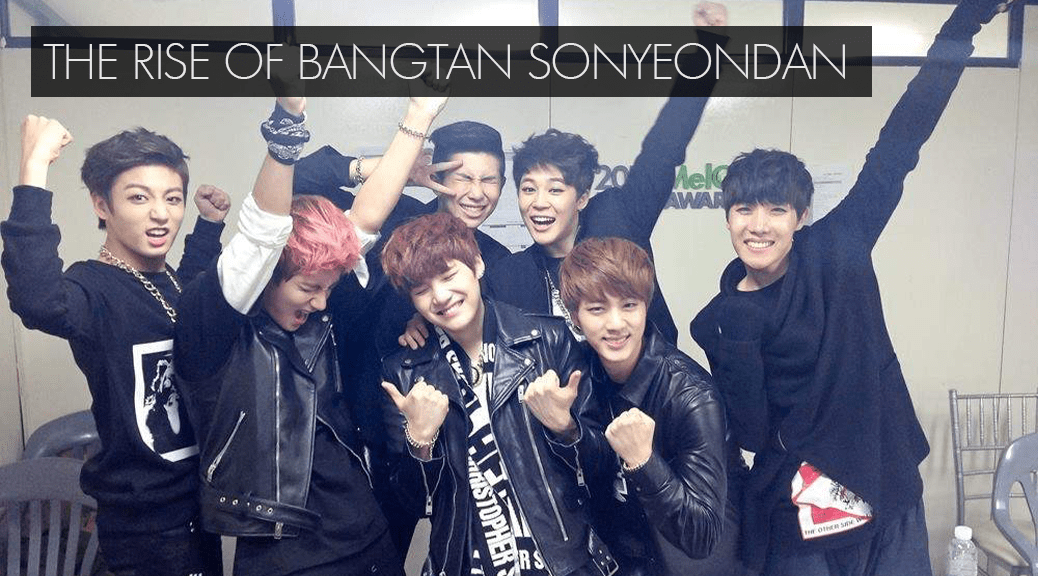
They debuted on June 13, 2013, as “Bangtan Sonyeondan,” translating to “Bulletproof Boys,” with their album 2 Cool 4 Skool. Selling 24,441 copies in total, the album was placed at number 65 for Gaon’s 2013 year-end album chart, which was good for a rookie group not under the Big 3 (JYP, SM, or YG Entertainment). The title track, “No More Dream,” criticized the way society views dreams and aspirations, a theme reflected in quite a few of their later songs.
Later that same year, on September 11, their album O!RUL8,2? (Oh! Are you late, too?) was released. The album debuted at number 4 on the Gaon Weekly Chart and ended the year as the 55th best-selling album in South Korea. The title track, “N.O,” goes into detail about how the school system forces children to ignore other aspects of life in favor of studying and becoming “the best.” On November 14, 2013, they won the “Rookie of the Year” award at Melon Music Awards, proving their hard work had paid off.
But for BTS, this was only the beginning.
 The Mustang Post