
THE CINEMA CHRONICLES
By Gabriel Sieling
Hosted by Gabriel Sieling

Official Transcript:
How The Spider-Verse Changed Modern Animation
{RISK BEGINNING THEME}
Gabriel Sieling: Hello Everyone and welcome back to The Cinema Chronicles. I’m your host Gabriel, and today we will be talking about how The Spider-Verse changed modern day animation.
SOUND EFFECT: Film Scroll
Question 1: What is “Spider-Man into the Spider-Verse?
Gabriel Sieling: For those who do not know, In December of 2018, Sony Pictures Animations released the first ever theatrically released Animated marvel film “Spider-Man into the Spider Verse.”
SOUND EFFECT: THWIP
Gabriel Sieling: Produced by Phil Lord and Chris Miller, the film follows Brooklyn teenager Miles Morales,
SOUND EFFECT: Miles Morales Quote
Gabriel Sieling: as he suddenly develops mysterious powers that transform him into the one and only Spider-Man. When he meets Peter Parker, he soon realizes that there are many others who share his special, high-flying talents. Miles must now use his newfound skills to battle Wilson Fisk, AKA The Kingpin. A mad businessperson who has a device that can open portals to other universes and pull different versions of Spider-Man into miles universe.
SOUND EFFECT: glitch SFX.
Gabriel Sieling: This Film opened with incredible reviews, and even won the academy reward for best animated feature film.
SOUND EFFECT: wow.
SOUND EFFECT: cha ching.
Gabriel Sieling: And as you might of guess, the attention this animated film was getting made the other studios very aware.
SOUND EFFECT: film scroll.
Question 2: how did Spider-Verse change the world of animation?
Gabriel Sieling: Spider-Verse had an Animation Style unlike any other animated film before, with the animation specifically made to look like a comic book come to life. The animators wanted to try something different from the common Pixar esk 3D animation, trying innovative ideas such as switching the frames per second on a specific character, and making every character have a unique style and tone to separate hem from the other. This is what caused “Into the Spider Verse” along with its sequel, “Across the Spider Verse” to start a trend in modern animation by invoking its hero’s comic-book origins with Ben-Day dots and wild, hallucinogenic sequences. This made it so that major studios have grown less fearful of animation and encourage them to diverge from the norm. The film proved that audiences would not reject projects that look drastically different from the house styles of Pixar and DreamWorks. Films like “Teenage Mutant Ninga Turtles Mutant Mayhem,”
SOUND EFFECT: ninja slash.
“The Mitchell’s VS The Machines,”
SOUND EFFECT: robot sound.
“Puss in Boots the Last Wish”
SOUND EFFECT: fairy tale sparkle.
And “Nimona”
SOUND EFFECT: fire.
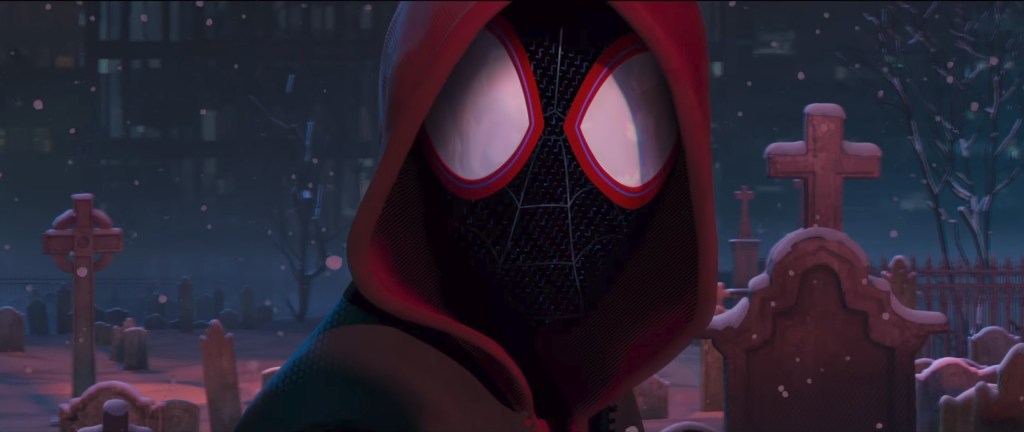
Gabriel Sieling: all have distinctive looks that are visually sensational without conforming to established playbooks. Like “TMNT Mutant Mayhems” approach to animation to make it look like it was drawn by a teenager, and “Puss in Boots the Last Wish’s” approach to make the animation look like each frame was pulled from a story book. If Spider Verse did not take the risk and tried to do something different with animation. Sure, not all new animated films take this approach such as animation studios like Pixar and Illumination. It does not affect the impact that these different animated films have on the audience.
Gabriel Sieling: If it were not for Spider-Man into the Spider-Verse, Animation would have never changed. The Spider-Verse films are classified as cinematic masterpieces. And with these films’ combination of great storytelling, animation, special effects, and heart, I believe they deserve that title. This just goes to show that technology is always evolving. And it is our choice if we evolve with it and try new things, or just stay in the past while everyone else moves on.
Thanks For Watching this episode of the Cinema Chronicles!
{RISK ENDING THEME}
(END.)
 The Mustang Post