All posts by Benjamin Lopez

Group Sounds: The Japanese Rock Movement of the 60s

By Benjamin Lopez

In the west, we’re all too familiar with bands such as the Beatles and the Rolling Stones, bands who dominated the music sphere and culture, and continue to influence music to this day. Even as far as Japan, their influence spread and dominated their youth music scene almost as much as it did ours. In the 1960s, the Japanese rock scene almost parallels ours. Yet how did it reach Japan, a nation so far away from the United States and United Kingdom geographically and culturally?


How Japan had so much western influence has to do with the American occupation between 1945 and 1952. After the destruction caused by the Second World War, the United States wanted to help rebuild the country and turn a former adversary into a current ally. With the influx of western aid and American soldiers, the cultural mixing changed Japan and shaped them into the nation they are today.


In these U.S. military bases would form the most popular style of Japanese rock of the time, with influence with western bands such as the Rolling Stones and the Beatles, groups would form to play western-style music with loud guitars, heavy drums, and punching lyrics.

The Beatles in Japan at the height of Group Sound’s popularity in 1966


One group of people would form the band “The Blue Comets” in 1952, created by those who would tour U.S. military bases and jazz cafes, places where Group Sounds would commonly be heard. Jackey Yoshikawa (Real name Itaoka Koichi) would join the band in 1957 and become the band leader in 1963. One of their most popular songs to this day is “Blue Chateau” released in 1967. According to lead vocalist “Tadao Inoue”, the song is supposedly “a tragedy” for Group Sounds as a genre.


“But actually, [making Blue Chateau] was a dilemma, because I made something that was the opposite of what I had been aiming for. It was also painful that other GS began to imitate it. I think GS’s tragedy began with that song” – Inoue.

Tadao “Daisuke” Inoue


Other notable bands include The Mops, and The Spiders who are said to have created the first true Group Sounds song, “Furi-Furi” released on May 5, 1965.


As our rock movement was associated with delinquency and bad youth, so were certain parts of GS in this time. “The Tigers” were one such band, with influences directly stemming from The Beatles, wouldn’t see huge popularity until their single “My Marie” released in March 1967. Some of these groups would embrace the style, and others would reject it.

The Tigers during their reunion in 1981


Pictures of the Blue Comets show the group in clean suits, neat hair, and formal poses, while pictures of The Tigers and The Mops show long hair, leather jackets, and clothing reminiscent more of The Beatles in the late 60s. As the movement carried on through the decade, these cleaner groups would become more widespread and mainstream, while those truer to the fashion of GS would fall to obscurity and typically disband.

Jackey Yoshikawa and his Blue Comets


The Blue Comets would see themselves on the popular Ed Sullivan Show in 1968, whereas The Dynamites would disband in 1969 after four years of relative obscurity. Yet when it comes to all new genres, some original bands would rather go out with the original musical intent than succumb to being “mainstream” as some thought the Blue Comets had become at the time.


As of 1970, most GS bands had already disbanded or fallen to obscurity. The Blue Comets released their last hit in 1971 with “Ame no Sanbika” (Song of Rain) selling less than 4,000 copies of their single. In 1972, many of the members would leave, informally disbanding the group. Most GS bands after disbanding would either form new groups, or reform their old ones such as The Spiders, The Tigers, and some continue to this day like the Blue Comets.


Some of these groups would be seen as pioneers of other genres, such as The Mops for Japanese psychedelic rock. In the following decades, especially the late 1980s, these groups would see a resurgence in popularity, and would continue to have popularity within the older generation.
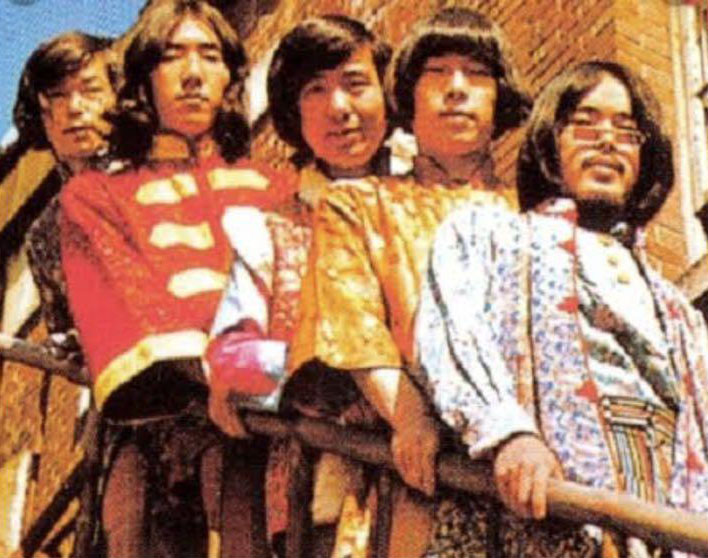
The Mops


On May 30, 2000, leading vocalist, and songwriter, Tadao Inoue (changed to Daisuke Inoue) committed suicide due to issues from retinal surgery and fatigue from caring for his ailing wife. Following this tragedy, in 2002, the Blue Comets would return as a group and play a tribute to him, and The Spiders would play tribute at his funeral.


Group Sounds would forever be remembered as an old genre of rock music from a time long gone, during the Showa era. Most of the original “founders” or pioneers of the genre left their groups long ago. Very few bands still hold the GS genre these days. Two such bands that were formed after 2000 fit into this genre, such as Kinoco Hotel and The Captains, self-proclaimed the “last Group Sounds.”


Kinoco Hotel has more of a unique sound than replicating the old style like The Captains. They have a style of jazz, progressive rock, and GS inspiration in their music. The Captains by far more popular still, and is the most traditional to how GS sounds as a whole.

Kinoco Hotel – Untamed Women


The legacy of this genre is one that is almost forgotten by the younger generations, it is seen as an old person’s genre, from the “Showa era,” and is mainly remembered by older people in the east and the west.


The popularity cannot be understated, however, because this phenomenon was incredibly impactful on Japanese culture. It was one of the first times east and west met within music, and a divider between the traditional older generation and their children born after the war.
It’s something worth remembering, and worth a listen. What was once a big shift in the landscape of Japanese culture is now the tradition. Same as it was here, what was once counterculture is simply just culture.

Hλlf-Life: Full Life Consequences

By Benjamin Lopez

The progress of technology in video games is always prevalent. Looking at games from 2012, the difference in quality becomes greater every passing year. Cutting-edge technology now will be average by five years and antiquated by ten. Understanding the quality of video games is to understand the technical limitations of hardware during the time. Games evolve with their technology, and sometimes they evolve side-by-side.


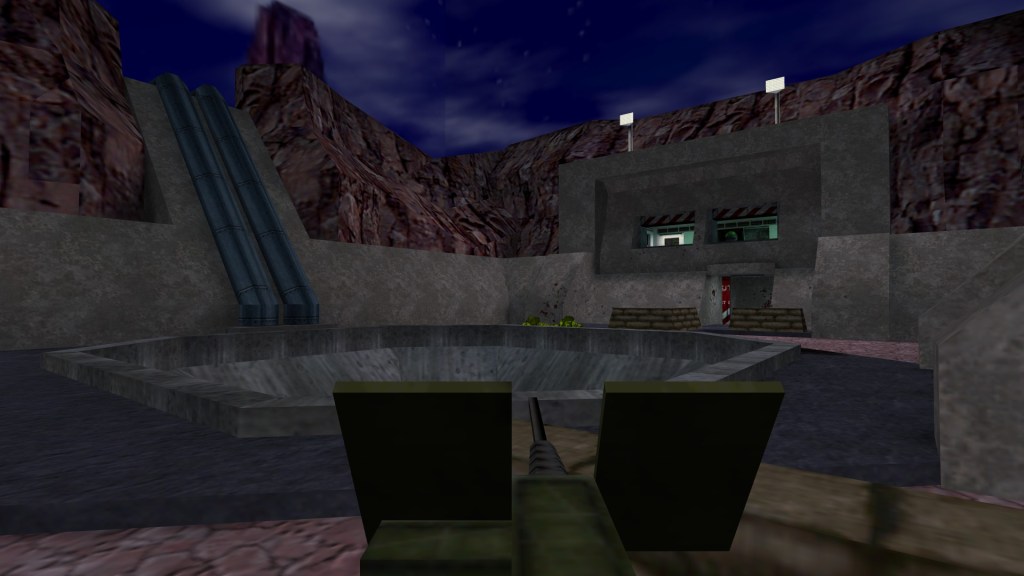
It’s easy to say how terrible a game from long ago looks. How blocky the geometry of the levels is, how stiff the player movement is, and how the weapons feel. Yet it is unfair to push these modern critiques on games over a decade old. A fairer assessment is to compare games with their contemporary hardware. We must remember people were still using CRT monitors when World at War was released in late 2008.

Why then should we discuss Half-Life, a vintage game from 1998 with the absolute bare minimum for a shooter? It has a three-dimensional engine, artificial intelligence, and loads of weapons. This is where perspective plays a large role. Our modern perspective gives us the ability to overlook how this game changed the genre after its release.

From looking on 1998 backwards, the biggest games in the shooter genre were that of Doom II and Quake II. Arcade shooters where you circle strafe around hordes of enemies equipped with the arsenal of God. Not many of which have a big semblance of a story, because back then, it wasn’t seen as important. When Half-Life was released, it was bigger step in the direction of storytelling, physics, and worldbuilding.

As soon as you start up Doom, you begin with a pistol and zombie soldier to start shooting at. In Doom II, you start with a pistol and a chainsaw to take out two of them. Starting up Half-Life, you start on a tram ride that lasts for five minutes. For most people playing this game for the first time, it’s as boring as actually going to work.


These graphics, while impressive for their time, quickly grew outdated. The sequel, Half-Life 2, released 6 years later and completely overhauled the look of Half-life. Someone nowadays may not be able to get past them at points with blocky geometry and compressed audio. Some people even may even have motion sickness when playing the original game.

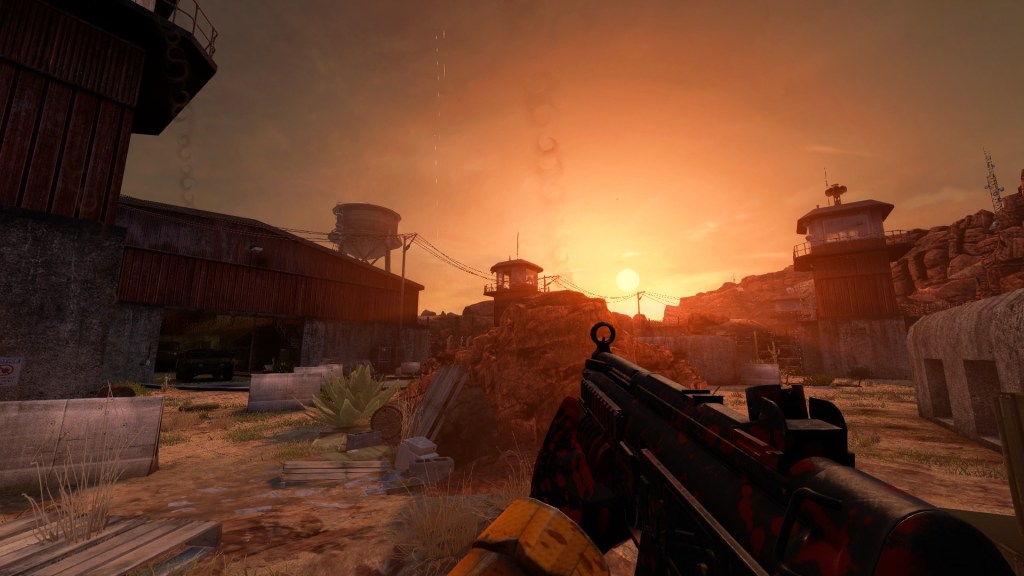
If someone wants to play a modern version of Half-Life, or maybe wants to have a more friendly experience to the modern player, there is a remake under the title “Black Mesa” which in essence is the same exact game, but with extended gameplay and a far more updated experience in terms of graphics and gameplay.

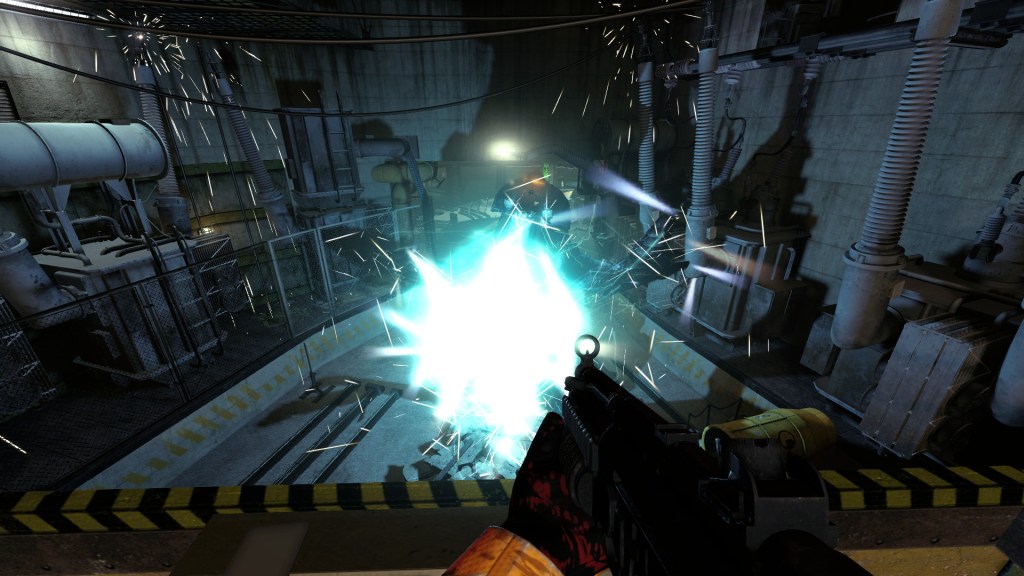
This game pushes the limits of what the old engine it uses can handle in terms of graphics and lighting. The Source engine, the game engine Half-Life 2 and Black Mesa run on, is roughly 20 years old, yet creates environments and atmospheres still impressive to this day.
When playing Half-Life, it’s easy to look past the disaster and find the sound effects and voice acting comical or even slapstick. Some even describe the game as a “black comedy” with the absurdity of the situations scientists find themselves in.

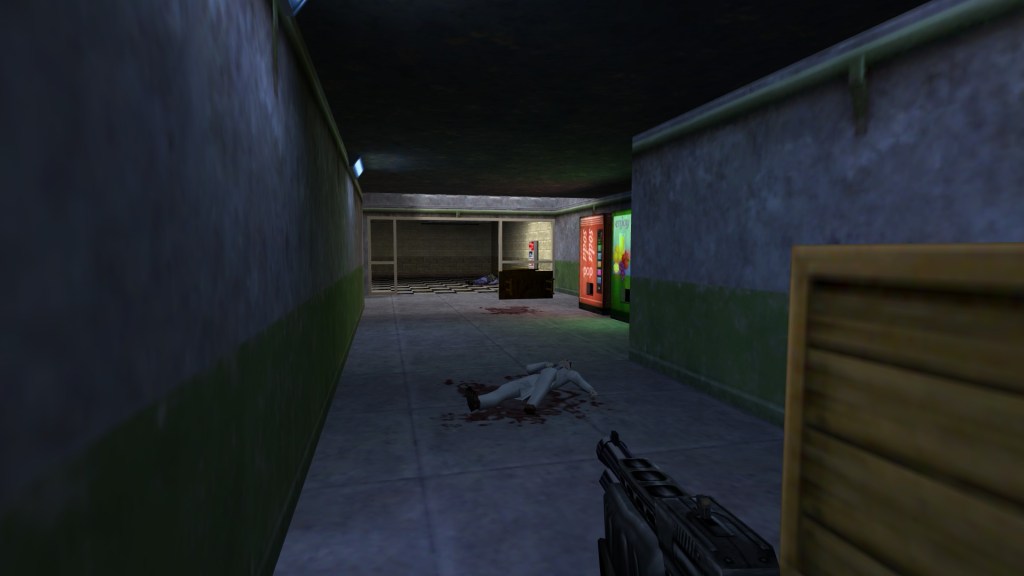
While these two are the same exact game, there remain differences in pacing and tone. In the office section, more is done to expand the whole part to remove the sterile empty hallways and make these hallways look like believable office spaces.

For example, in the original game, one hallway is supposed to represent a cafeteria infested with aliens. At first, it’s almost confusing as for what it’s supposed to represent until you start to look around and take in the atmosphere. In Black Mesa, it becomes a little more clear and sometimes even more believable for a room to exist.


Focusing on the environment and story is not forced upon the player. Barring a single 20 second moment halfway through the game, the player never loses control of the character they play as. You never lose perspective, even during the most important moments of the story.

The game will never take away from the player’s focus, you never leave the character for an important piece of story for a cutscene. Important set pieces can be avoided or missed entirely if the player isn’t exploring their environments. Things such as scientists being pulled into vents, or a hidden shotgun inside a sentry turret room, most of these rely on the player to explore and find them.

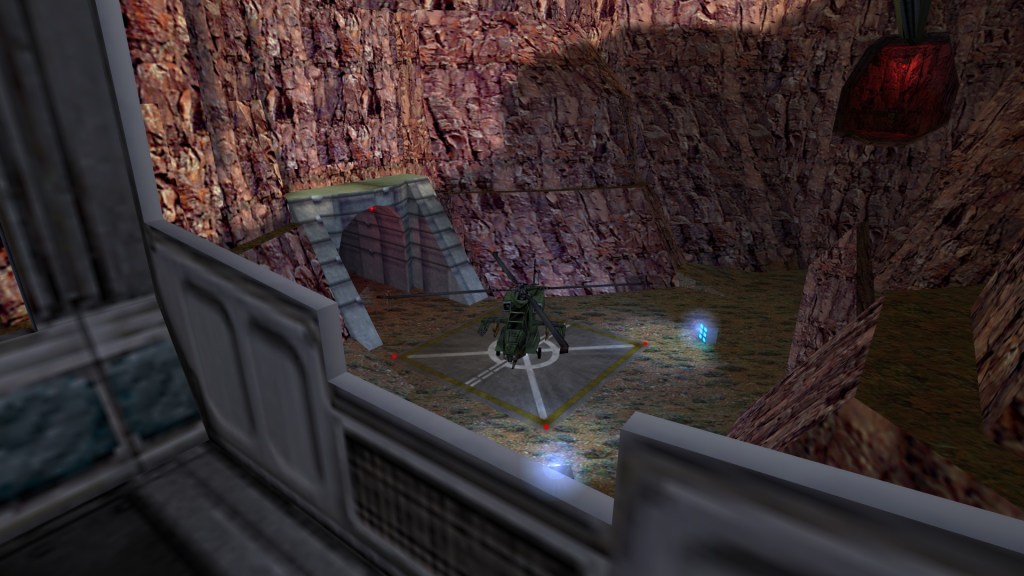
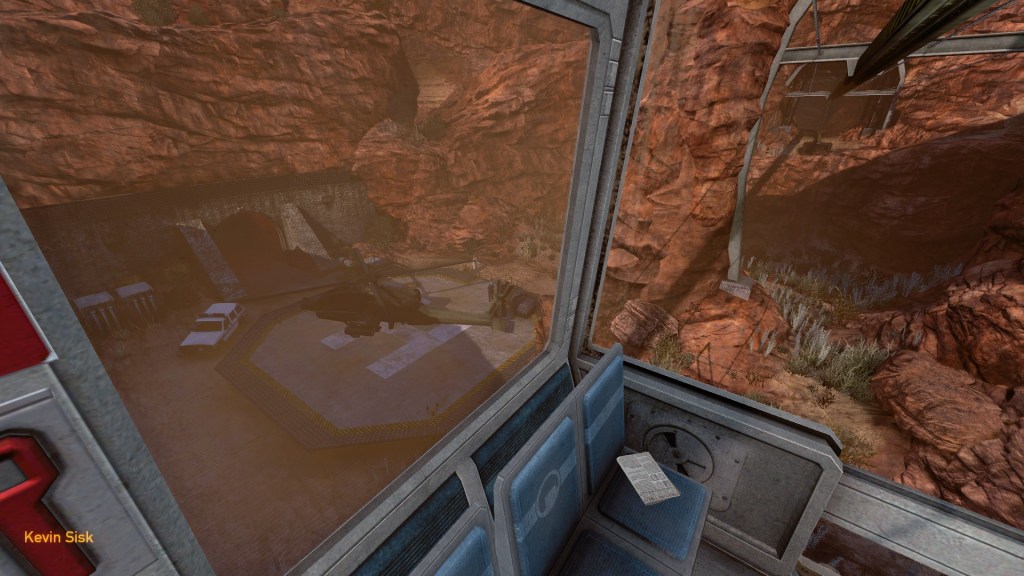
When it comes to improving on the story, Black Mesa wishes to enhance the existing one without huge changes. Those that exist are confined within one chapters of the original game, “On a Rail”. This is the most tedious chapter of the game, yet it is also the most open. It encourages exploration of your environment, but only in theory. It’s a looping claustrophobic maze of concrete tunnels filled with soldiers and aliens, both fighting each other.

In context of the story, it shows how the “human faction” is beginning to fight against the “alien faction”, as well as this satellite that is mentioned in the end of the previous chapter. When it comes to these older games however, you quickly forget what the story is if you cannot progress beyond an unclear puzzle or a looping shooting gallery.


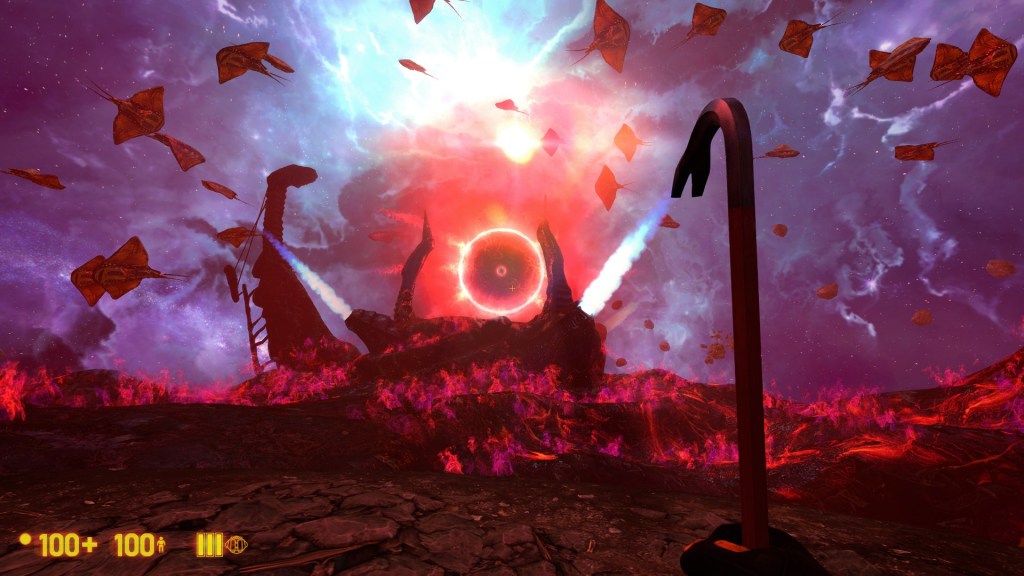
Black Mesa makes the change by cutting out a lot of this chapter. This plus the alien world, “Xen”, at the end of the game, are the only parts of the game that are drastically different from the 1998 original. Many sections considered tedious have been completely removed, and the chapter is heavily modified to continue a familiar feel for original players, but also simplified for newer ones.

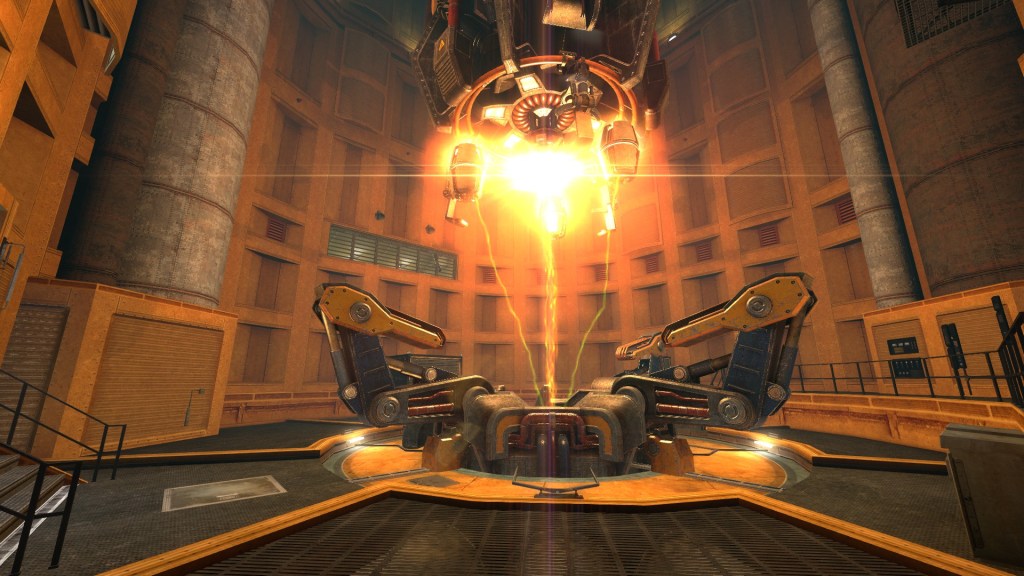
Important events in the game are amplified technologically and graphically. The rocket launch at the end of the chapter goes from a slow tube visible through a tiny slit to a huge room with a large glass window to view the huge rocket until it disappears into the sky.

Beyond this chapter, the remake is relatively faithful, with additions for gameplay, or for graphics and worldbuilding. Playing through the original first is recommended far more than this first. It will make you appreciate the advances in technology, but also in gameplay and storytelling.
One thing to note is the game’s soundtrack is drastically different in tone and mood from the original. After starting the disaster, the background music goes from ambient sounds to a slightly more impacting synthesized track.


Most of this game’s soundtrack can consist of a heavy guitar for combat, and a slow piano for the quieter/moodier segments. In the original, there’s more of a variety in instrument and style. They set the tone for certain segments and have that cheesy 90s feel to them.

Although both the music and the theme of these two differ completely, they still end up being as good as they both can be in their own way at setting the mood and tone for the player and their environment.
The issue that comes with a modern remake is that of how powerful it becomes, and how limited the player may be with a lower-to-average machine. A typical laptop will not be able to run this game. An older desktop computer from 2015 and older will have an issue running this game with the highest settings.

Most modern games have a cinematic graphics setup, and a typical gaming graphics setup. Because the base of the engine is roughly 20 years old, these issues with graphics come into play, even in an updated build.

The source engine by nature is CPU intensive, meaning that is where the most strain will be placed on the computer. In the Earth segments of Black Mesa, the strain is negligible besides the topside chapters. In the Xen chapters however, this is where the graphics and technology of the aging engine get pushed to its limits.


Often will you be in a massive open island surrounded by a large skybox filled with dynamic lights and fully modeled environments, or in giant caverns with bumpy and rocky terrain.
When Half-Life 2 was released in 2004, the engine was built with boxy and square arenas in mind. Even in Episode 2, released in 2007, the partial sequel to the game, the cave areas are relatively flat and square compared to the alien world of Xen.

What are the advantages of playing Black Mesa? When playing the original, it’s apparent where the Quake 2 influences reside. Enemies have death animations rather than ragdolls, physics is incredibly limited and questionable, and the stability of the old engine is something to put into question.

Black Mesa has all the benefits and downsides of the source engine. NPCs can sometimes die by tripping over a soda can, or panic over an enemy that is in another room blocked by a locked door. The game tries to solve this by making events heavily scripted, meaning some characters cannot go with the player unless intended to.

Yet unlike Half-Life, the limitations of the engine won’t typically impact the gameplay. It is kept up to date with engine and performance patches, and the developer team is still active, meaning that for them, there is still an active effort to fix bugs common in the engine.

Although Black Mesa is a modification of a 2004 game from 2012, its full release 3 years ago 2020 ensured that the engine is updated far more regularly for player and gameplay convenience. Older games should not be discounted as relics of the past. Black Mesa shows that a dedicated group of programmers and developers can remake an old classic to show their vision for what the original game should have been.