
By Carter Phillips
A lot of focus is given to the all-time greats and contemporary mainstream.
With so many people talking about them, it can be hard to give a unique perspective and mention information people won’t hear or read anywhere else.
Perhaps because of this, I usually feel more at home talking or writing about films in small crevices of popular culture or that aren’t even in that spectrum.
Yes, I like Star Wars and Batman but there are so many other things I love which are slowly fading away from public memory. This is the main reason I focus on classic films for the Mustang Post.
Therefore, I’ve decided to write about cult classics and give three recommendations. This is not a best of list; they are just three that I enjoy.
There are also many films which originally were very niche, but at this point are mainstream, such as Donnie Darko. To me, cult classics are movies like Basket Case or Killer Clowns from Outer Space. If we go by the logic that Donnie Darko is still a cult classic, then we go by the logic that Citizen Kane is still a cult classic.
These films are also not without flaws, but I’m in the mindset that you can still enjoy and appreciate a film that is imperfect or even objectively awful.
The Snake Girl and the Silver-Haired Witch (1968)
A young girl living in an orphanage is united with her biological parents.
The house blends in with the others in the neighborhood and its interior looks like any other, to such a point where it’s a little cozy. However not all is as it seems.
Something lurks in the house which clashes against the picturesque world they live in.
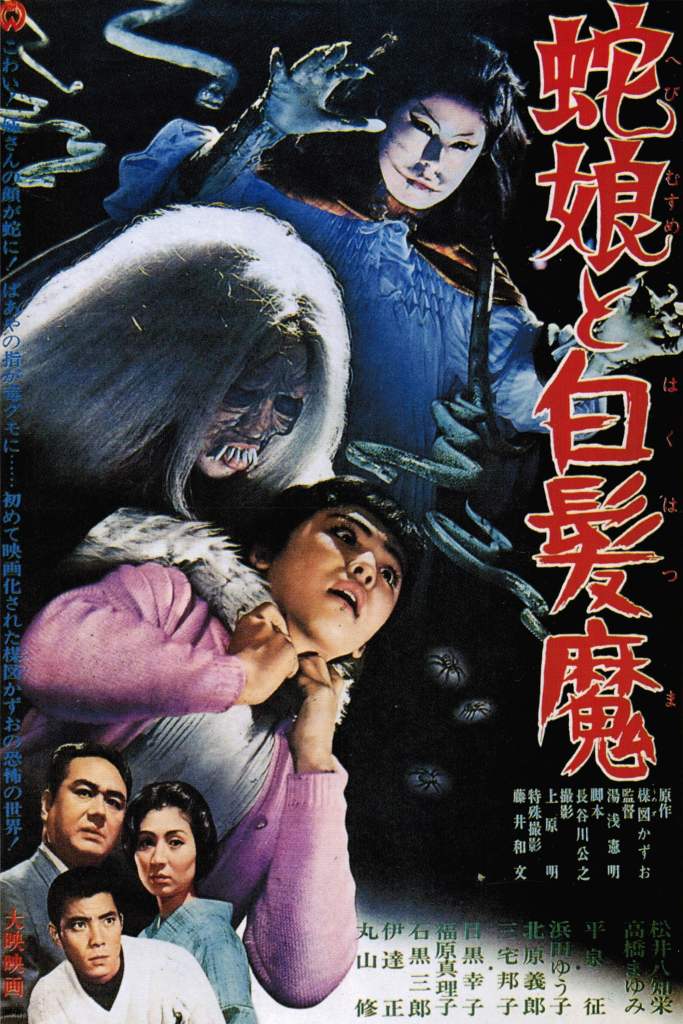
Based on a popular Manga and adapted by Daiei Film, the studio most well-known for the Gamera series (a franchise about a giant turtle, made to cash in on the Godzilla series) and credited to Noriaki Yuasa, the leading director of those movies, The Snake Girl and the Silver Haired Witch is one of the most interesting films of classic Japanese cinema.
Gamera is the protector of the universe and referred to as the Friend of All Children. Almost all of the original Gamera cycle featured children as the main characters and by default, were highly fantastical.
Noriaki’s experience with the franchise made him the perfect director for The Snake Girl of the Silver Haired Witch but because of the darker tone, it also makes for an interesting departure from his narrative style.
Made to be a kid film, the movie delved too far into the horror and fantasy and traumatized many of the children who went to see it.
Told through the heightened imagination of the child, the film manages to express a complexity uncommon for the average kid’s film.
Narratively similar to The Phantom of the Opera, Frankenstein and Eyes Without a Face, the movies tone clashes between childlike optimism, unfiltered nightmare and the cold blood of a fresh crime scene.
There’s an over reliance on narration which was likely used because the filmmakers suspected that the kids would get bored if nobody talked for long stretches of time. This is a small issue I have with the film. The average moviegoer would likely not be bothered and would not question it. Either way, it doesn’t hinder the experience.
The film is a macabre trip. It’s genuinely eerie but also shocking in many places. Its relatively tame for today, but because it’s a kid’s film and because it’s so old, nobody would expect it to depict many of the gruesome details. At one point, a character’s rips open a living frug and throws it at the child. “We’re not in Kansas anymore, Toto.”
Fragment of Fear (1970)
After the success of the highly influential Blow-Up, David Hemmings, the lead of the film, returned to the mystery thriller with the lesser-known Fragment of Fear in 1970.
It starts out like an average British whodunnit from the 1970’s but as it goes on it starts to filter in giallo influence and pre-curses the American paranoid thrillers from a couple years afterward.
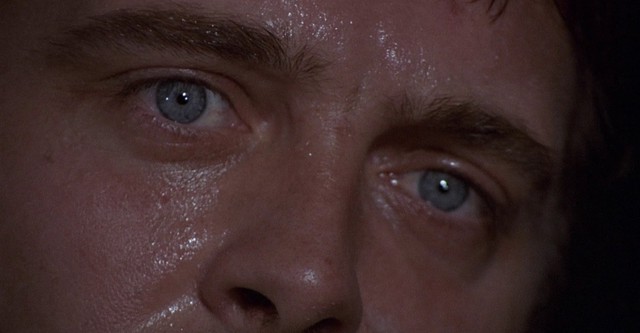
As the murder mystery turns into an espionage psychological horror, hints arise that can lead the viewer into two different conclusions: It’s all a cover-up or main character is slowly going insane after the traumatic murder of his aunt (or he’s stuck on heroine).
Some people will defiantly be disappointed by the ending, David Hemmings didn’t even like it, but it’s memorable. It keeps you wondering long after the credits. I think that the screenwriter Paul Dehn (who later went on to pen Beneath the Planet of the Apes, the most artistic and experimental film of the franchise) was in the right direction. Keep in mind also that this is an adaption from a book published five years earlier in 1965 so credit should also be given to its author John Bingham.
The Creeping Flesh (1973)
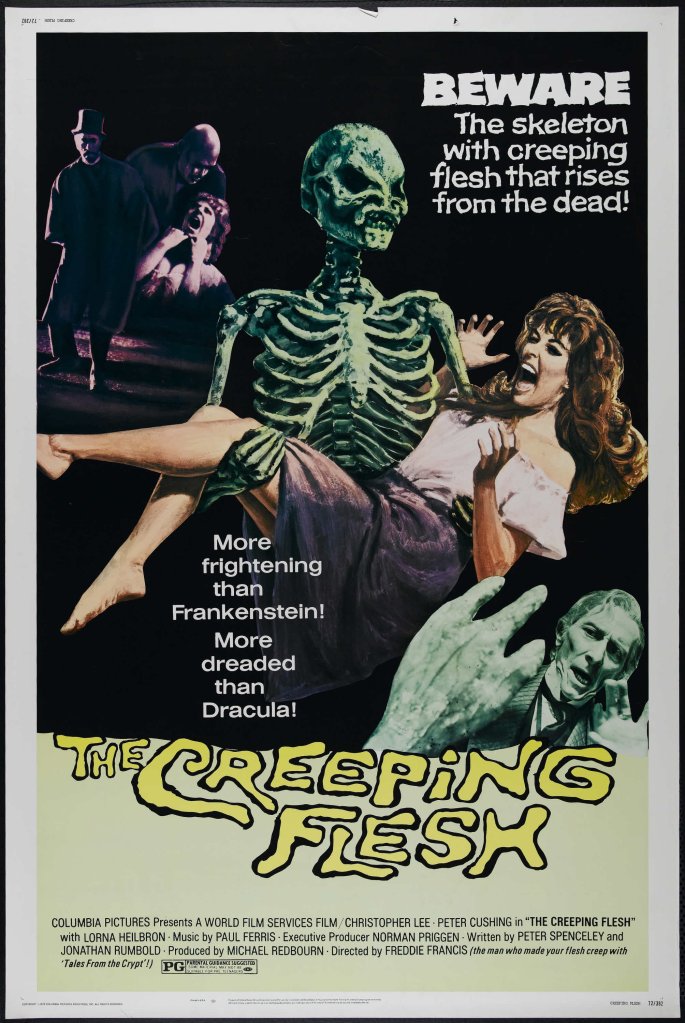
Horror icons Peter Cushing and Christopher Lee star in this forgotten gem from the British horror scene of the 1970’s.
Nowadays, they are more commonly associated with Star Wars (both) and The Lord of the Rings (Lee) however during their heyday they were as well known for their horror films as Vincent Price.
They were the Lugosi and Karloff duo of their era, however unlike those two, who had an over exaggerated rivalry publicized about them, Cushing and Lee were intimate friends in real life. This always created an interesting chemistry because two best friends were pretending to be enemies on camera.
Coming out in the early 1970’s it is at an interesting era in the genre.
Censors were becoming less restrictive and smaller studios were getting more and more daring.
Films such as The Last House on the Left, Texas Chain Saw Massacre, Halloween, The Amityville Horror and most importantly The Exorcist took the horror genre away from decrepit castles and grand dusty mansions to the modern day.
Even as early as 1968, Peter Bogdanovich: The Ultimate Cinephile, made Targets with Karloff, a film way to inappropriate for school, to go into detail about but which has only gotten more relevant and genuinely upsetting with the succession of spree shootings in the last few decades.
It’s hard to pinpoint exactly where this shift started, but it is necessary to understand the context.
Some people would claim that Night of the Living Dead is the big movie that altered the genre, and it did but was it the movie entirely responsible for this shift?
In reality it had been a slow process that began shortly after the second World War, when Dracula, Frankenstein and the Mummy no longer scared people.
They had the horrors of war, concentration camps, Hiroshima and Nagasaki. In a way, Earth was in a horror movie of its own.
This is when horror and other genres payed more attention to fate, individuality or a lack thereof and scientific progress.
Before then, the fears on the screen were reminiscent of: disfigurement, outsiders and being rejected. This was a generations direct response to the Great War, considering the vast amount of veterans who came back wounded.
In those films, the fear was that you, the viewer, had more in common with the so-called monster than the ‘normal’ human characters.
The look of The Invisible Man, hidden in winter wrappings and with a scratchy voice (which Claude Rains had acquired after allegedly inhaling some of the mustard gas on the battlefield) to me, is a perfect example of this.
The times were changing but meanwhile, Lee, Cushing and Price were still appearing in beautiful gothic period pieces.
The Creeping Flesh is about an archeological discovery one could imagine Wells or Millies dreaming up.
Cushing discovers the bones of an extinct Goliath. If the bones touch water, they can reanimate.
Lee, the bitter brother of Cushing wants the glory for himself and sets out to rob him of the discovery.
Oddly, the film has a strangely melodramatic side to it. At times it almost feels made for tv, however the abrupt change in tone is usually fleeting.
This is no masterpiece, especially when compared to the other films of the era, with the same actors, however with its dated or flimsy aspects, it has a charm to it that is non-existent in any contemporary film.
It’s not schlock either. This film has the same creativity as the classic horror novellas and books from the 1800’s.
It’s ironic because, without going into spoilers, Cushing’s scientist has a downfall due to his own passion and discovery.
The film does make a statement on science. It asks what betterment discovery is. Are some things best left forgotten? Or do we need to remember, as not for it to become repeated?
Cushing played the role not long after the death of his wife, and likely this is the reason his characters wife is also dead. The experience he brought to it, made it what I consider to be his best performance.
In 1973, when The Creeping Flesh was being made, the Frankienstine films over at legendary horror studio Hammer Film Productions were in a late stage.
Both actors were regulars there and Cushing was the man who played Frankenstein.
It is interesting to see him play a good-natured scientist opposed to one who is bitter and morally skewed.
If anyone was to play a horror scientist during this time, it should have been Cushing.
The majority of the film builds up to when the skeleton will awaken, and going into it, the viewer should probably be aware that it takes a long time.
It ends with a Cabinet of Dr. Caligari style twist which stays with the audience long after the sun sets.































 The Mustang Post