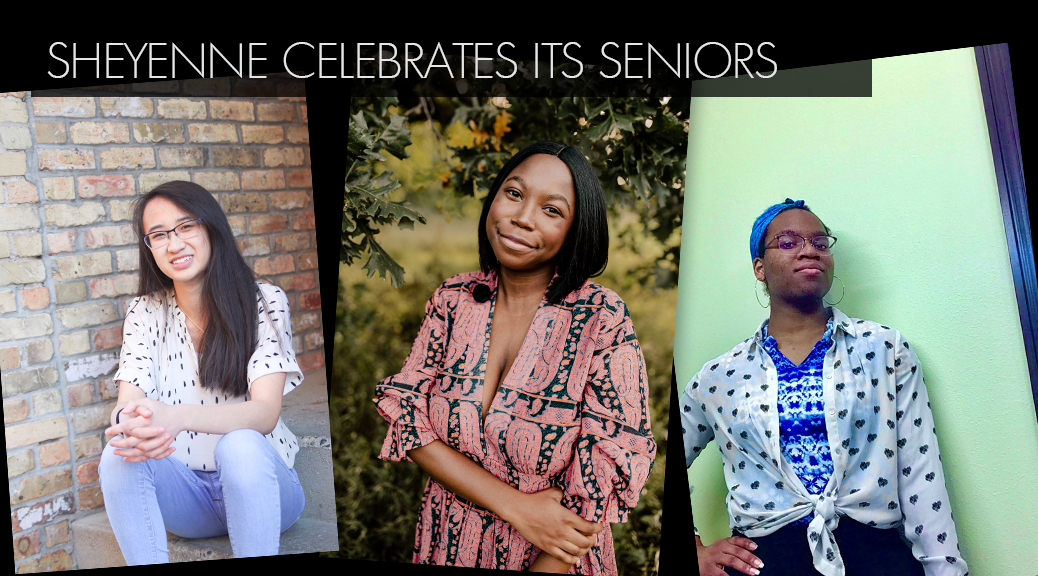
There are many things to celebrate about our senior 2022 class at Sheyenne High School. They have worked hard to become the people who they are today and will go into their future with lasting memories from their time at Sheyenne. Grace Widjaja, Keona Munowenyu, and Christine Nwaigwe are some of the outstanding seniors who have made a great impact at Sheyenne.
Grace Widjaja is president of the Student Council, captain of the Sheyenne Speech Team, principal violist in the pit orchestra for “Bright Star,” principal violist for the Fargo Moorhead Area Youth Symphony, and member of the National Honor Society. Grace is also a kindergarten youth group leader, math tutor for 4th and 5th graders, and gives viola lessons on the side. After high school, Grace hopes to attend a four-year university in the Northeast to study Molecular Biology and Biochemistry with a minor in Music Performance on the Viola. One of Grace’s favorite mantras is “Be unapologetically you!”
Keona Munowenyu is in Student Congress, Sheyenne Debate, Student Council, and the National Honor Society. Throughout her high school career, Keona has won a championship title and national qualification for Student Congress. She is also a champion in Debate in the Public Forum Division. She has been to the National Speech and Debate Tournament twice to compete on the North Dakota World Schools Debate Team during her sophomore and junior year. Keona is now officially a state qualifier for Speech in poetry and humorous duo. Once Keona graduates, her plan is to land a job in Los Angeles at a production studio, like Warner Brothers or Universal Studios. Her life dream is to create her own production company to create major motion picture films. Keona intends to go to Columbia College in Chicago to major in Film and Television with a possible minor in marketing or journalism. Her favorite quote to live by is “My mission in life is not merely to survive, but to thrive; and to do so with some passion, compassion, humor and style” -Maya Angelou.
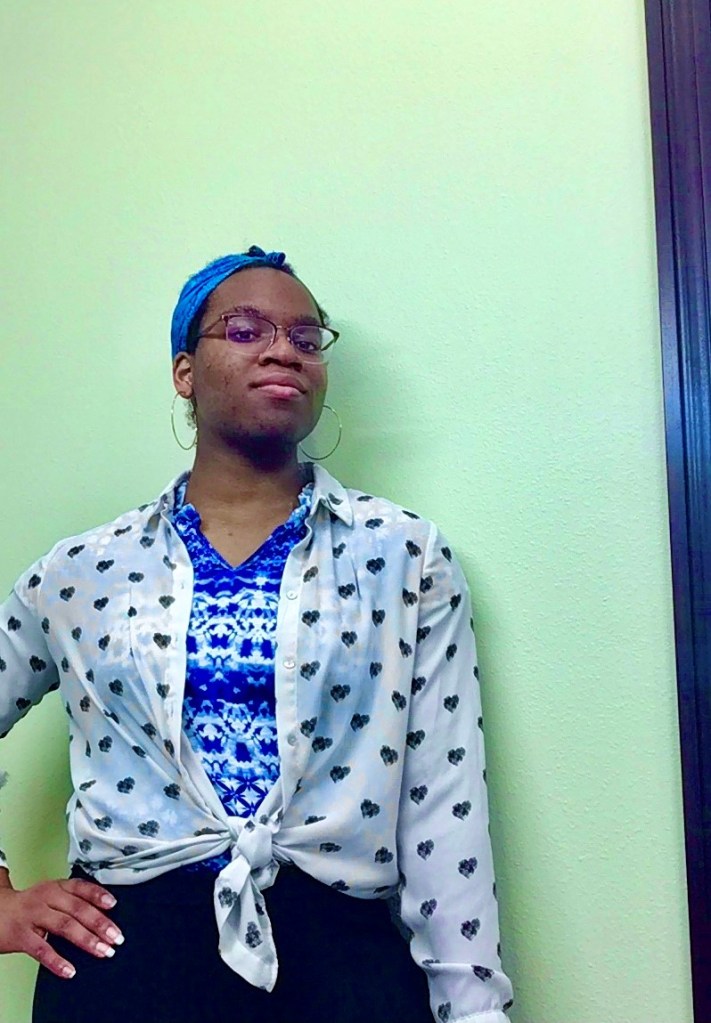
Christine Nwaigwe is part of the National Honor Society, Sheyenne Student Council, Student Ambassadors, Diverse Cultures Club, Student Congress and French Club. Christine is also on the Sheyenne Track and Field Team. Once she graduates, Christine wants to become an Economist or an Economic Consultant on Policy Making. She hopes to attend Williams College in Massachusetts or Brown University in Rhode Island. Christine’s favorite quote is “Life teaches you a lesson every day, if you are attentive enough in the class of life”-Invajy.
According to History, Black History Month was created in 1926 by “Carter G. Woodson, a noted African American historian, scholar, educator and publisher” who originally meant black history month to be a week. Black history month was chosen to begin in February because (as stated by USA Today) this was the month that “coincide with the birthdays of Frederick Douglass, a famed abolitionist who escaped from slavery, and President Abraham Lincoln, who formally abolished slavery.”
Kay Boatner from History explains that the month-long recognition of black history was created in 1976 when U.S. president Gerald Ford extended the recognition to “honour the too-often neglected accomplishments of Black Americans in every area of endeavour throughout our history.”
So, in honor of the accomplishments of Black people in this country, Sheyenne Mustang Media has composed a list of people of color who have paved the way and deserve to be recognized this month for their perseverance and excellence.
Literary and Film
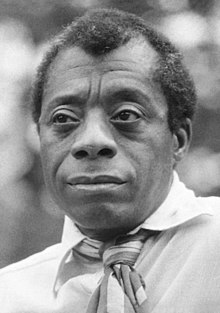
James Baldwin
The Biography states it best when they write that James Baldwin is “One of the 20th century’s greatest writers” and “broke new literary ground with the exploration of racial and social issues in his many works.”
Britannica writes that Baldwin was an “American essayist, novelist, and playwright whose eloquence and passion on the subject of race in America made him an important voice, particularly in the late 1950s and early 1960s, in the United States and, later, through much of western Europe.”
Making history and paving way for important conversions to be held according to Britannica “his second novel, Giovanni’s Room (1956), deals with the white world and concerns an American in Paris torn between his love for a man and his love for a woman.” Highlighting the importance of such a novel The Biography states Baldwin’s novel Giovanni’s Room “broke new ground for its complex depiction of homosexuality, a then-taboo subject.” According to the Biography “his words struck a chord with the American people, and The Fire Next Time sold more than a million copies.”
Britiannica writes that The Fire Next Time was composed of “two previously published essays in letter form by James Baldwin” and in these essays Baldwin wrote “warned that, if white America did not change its attitudes and policies toward black Americans and alter the conditions under which blacks were forced to live, violence would result.” Biography writes that this statement from Baldwin was not unwarranted he had witnessed so much violence “especially the assassinations of Evers, Malcolm X and Martin Luther King Jr. — caused by racial hatred.”
Ava DuVernay
Variety writes that this incredible woman “has built a brand with smart storytelling infused with contemporary issues and often a social justice lens.” According to this article “DuVernay’s ARRAY banner produces a number of drama series through its pact with Warner Bros. TV, including OWN dramas “Queen Sugar” and “Cherish the Day.”
Kerri Alexander from Women’s History finds that despite not picking “ up a camera until she was thirty-two, Ava DuVernay has made history as a writer, director, and producer.” This article from Women’s History continues to write that Ava DuVernay “was the first African American woman to win Best Director at the Sundance Film Festival, be nominated for a Best Director Golden Globe, direct a film nominated for a Best Picture Oscar, and direct a film with a budget over $100 million.”
Her project When They See Us according to this article “was nominated for 16 Emmy awards, making her and Beyoncé the first African American women in Primetime Emmy history to receive multiple nominations in their careers for directing.” DuVernay is nothing but a visionary for the new age of film and tv.
This article from Women’s History writes towards the end that “in 2010, she started her own film distribution company called African-American Film Festival Releasing Movement (AFFRM) but rebranded the company in 2015 under the name ARRAY to focus on racial and gender inclusion in filmmaking.” The tv and film industry should personally be thankful that DuVernay is doing the great
Activist
Claudette Colvin
In 1955 Claudette Colvin‘s at only 15 years old attending a high school in Montgomery, Alabama, had first observed Negro History Week and felt encouraged enough to act on her fundamental right to freedom. According to Hadley Meares from History “on March 2, 1955, when she boarded a bus in downtown Montgomery. She and three other Black students were told to give up their seats for a white woman.” Strengthened by the lessons Negro History Week taught Colvin refused to get up. “My head was just too full of Black history,” she stated in an interview with NPR. “It felt like Sojourner Truth was on one side pushing me down, and Harriet Tubman was on the other side of me pushing me down. I couldn’t get up.” The article continues to state that Colvin was arrested and put on indefinite probation and despite this act of bravery taking place nine months before Rosa Park’s similar act of bravery the “NAACP chose to use the 42-year-old civil rights activist as the public face of the Montgomery bus boycott, as they believed an unwed mother—Colvin became pregnant when she was 16—would not be the best face for the movement”
Phill Wilson
Gwen Aviles and Ariel Jao from NBC News share that “Longtime activist Phill Wilson has spent four decades fighting HIV/AIDS in Black communities.”
In 1983 the article continues to write that during the height of the HIV and Aids epidemic in the United States Wilson’s then-partner Chris Brownlie found out he had contracted HIV, a disease he would later die from. At the time the American public ignorantly believed this was a disease that only affected white gay men.
Wilson commented that “Black people were always disproportionately impacted, over-represented in disease, underrepresented in advocacy, underrepresented in resources dedicated to fighting the disease.” Founder of the Black AIDS Institute in 1999 Wilson has worked tirelessly since then to educate Black communities about AIDS and increase their access to necessary antiviral treatments necessary to combat this disease.
Rev. Dr. Pauli Murray
According to Hadley Meares from History “The writings of The Rev. Dr. Anna Pauline “Pauli” Murray were a cornerstone of Brown v. Board of Education of Topeka, the 1954 Supreme Court case that ended school segregation.”
This woman really did the most for her community, as a lawyer, Episcopal priest, civil rights activist and co-founder of the National Organization for Women. A fighter for women rights Murray the article continues to state “In 1965, Murray and Mary O. Eastwood co-authored the essay “Jane Crow and the Law,” which argued that the Equal Protection Clause in the 14th Amendment should be applied to sex discrimination as well”
Entertainment
Laverne Cox
Laverne Cox, best known for her role as Sophia Burset on Netflix’s Orange Is the New Black has according to Irina Gonzalez from Oprah Daily “opened doors for LGBTQ folks not only in Hollywood but across the globe.” ‘
She became the first transgender to ever be nominated for acting at the Primetime Emmys in 2014. Her reach in the media has been vastly expanding and making a major difference.
Already according to this article she has the title of being the “first transgender person to appear in Times Magazine in a story titled, “The Transgender Tipping Point.” That story revealed Cox’s childhood how she came to realize how she might be transgender and what that realization meant for the rest of her life.
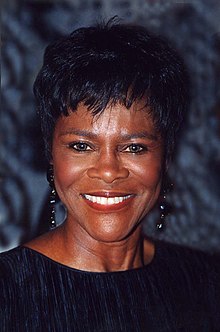
Cicely Tyson
This American Actor truly did pave a way for many black female actors to come. According to Erin Kaplan from Politico, she was first discovered by Ebony Magazine to become a model Cicely Tyson didn’t become an actor till 1951 when she took “roles on soap operas and films.”
Her career that spanned 60 years included memorable roles such as Binta in Roots, a limited series that captured the narrative of many African slaves and their families, and the character Constantine Bates in The Help a movie and book focusing on the perspective of black maids on white families.
Overall due to Cicely Tyson’s enduring work not only has she been awarded a Tony Award, Screen Actors Guild Award, and even a Primetime Emmy award for Actress of the Year but, this phenomenal actor has been given the Presidential Medal of Freedom as well.
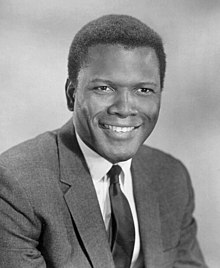
Sidney Poitier
This elegant man according to Brandon Griggs from CNN is “Hollywood’s first Black movie star and the first Black man to win the best actor Oscar.” His desire to play roles other than just the servant in the 1950s to 1960s gave way for people to realize black people could perform other roles as well such as doctors, teachers and detectives.
The pressure as an only black Hollywood Actor was immense. “It’s been an enormous responsibility,” Poitier told Oprah Winfrey in 2000. “And I accepted it, and I lived in a way that showed how I respected that responsibility. I had to. In order for others to come behind me, there were certain things I had to do.”
He took this responsibility well and would not take characters he thought were one-dimensional stereotypes of black people. It’s because of how he desired to be portrayed that black men and women today have greater opportunities in Hollywood and to see themselves represented accurately.
Science
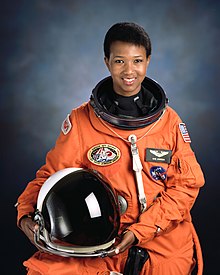
Mae Carol Jemison
Space travel is cool but what’s even cooler is that Mae Carol Jemison was the very first black woman to travel in space. Mae Carol Jemison is not only a NASA astronaut but she also claims the title of doctor and engineer as well. The mere fact that Dr. Jemision is no easy accomplishment.
Kerri Alexander from Women’s History finds that when Jemison applied to the astronaut program at NASA in 1987 she was “one of the 15 people chosen out of over 2,000 applications.” Alexander continues to provide information on how on September 12, 1992, Dr. Jemison and six other astronauts went into space on the space shuttle Endeavor. This voyage made Jemison the first Black woman in space and forever broke away for other children of color to dream that they too could work with NASA and even travel space if they desired to.
For her many accomplishments, Dr. Jemison has earned the following honors including the National Organization for Women’s Intrepid Award, Kilby Science Award, and she has been inducted into the National Women’s Hall of Fame, National Medical Association Hall of Fame and Texas Science Hall of Fame.
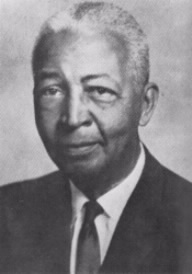
Lloyd Augustus Hall
The many efficient ways we preserve food can be thanked by Mr. Hall in particular for his discoveries in this area.
As stated by the ASC organization “Before his research, most preservation was done with salts and it was difficult to keep foods from spoiling without making them taste bitter.”
To address this issue Mr. Hall this article continues by saying he “created a system to sterilize spices by using ethylene gas in a vacuum chamber” a system “that was later adapted by the food, drug, and cosmetic industries.”
His vision for food preservation is still in use today so if you’ve ever wondered why your meat can last in the fridge for longer than a week you can thank him.
Marie Maynard Daly
This woman who embodies the word grit graduated with a Ph.D. from Columbia University in 1947 and became according to the Science History Insitute “the first African American woman to obtain a Ph.D. in chemistry in the United States.
Caldwell devoted much of her career to research on the nature and action of amylases or starch-splitting enzymes. In 1960, the American Chemical Society awarded her the Garvin Medal for her work.”
To pay it back and encourage more black children like herself to pursue careers in science and medicine Marie Maynard Daly put it upon herself to create programs to encourage the number of minorities in those programs and according to this article “in 1988, she established a scholarship fund at Queens College for African Americans in commemoration of her father” who also wished to pursue a career in chemistry similar to that of his daughter.
Sports
Wilma Glodean Rudolph
Wilma Glodean Rudolph did not always get a running start growing up. In fact, Britannica reveals that “Rudolph was sickly as a child and could not walk without an orthopedic shoe until she was 11 years old.”
This article continues to say that she was a self-determined young lady though and during the 1960 Olympic games she accomplished multiple gold medals in the 100-meter race, 200-meter dash, and the 4 × 100-metre relay team, “which had set a world record of 44.4 seconds in a semifinal race.”
After she retired from running Britannica concludes that Rudolph encouraged young runners and “was an assistant director for a youth foundation in Chicago during the 1960s to develop girls’ track-and-field teams, and thereafter she promoted running nationally.”
Arthur Ashe
In 1968 the US Open was won by Arthur Ashe a man who lived as an ambassador of equality and goodwill. International Tennis Hall of Fame writes that “As he rose from segregation and racial roadblocks to becoming the first African-American male to win the US Open (1968), Australian Open (1970), and Wimbledon (1975).
In 1963 he was the first African-American chosen to play Davis Cup for the United States, and in ten years representing his country, helped the US win five championships (1963, 1968, 1969, 1970, 1978).” Though it’s worthy to mention all his incredible accomplishments as a professional tennis player he was so much more than who he was on the court.
The article continued to say Arthur Ashe “was an activist, author, educator, and a tireless campaigner for civil rights and racial equality, not only in the United States but worldwide, particularly against the apartheid systems of South Africa.”
International Tennis Hall of Fame applauded him as a man of many solid principles and strengths but one of his greatest honors “in 1993 when he was posthumously awarded the Presidential Medal of Freedom by President Bill Clinton.”
Anyone who takes Spanish in Sheyenne can tell you just how amazing the program is, lead by some of the most skilled staff at Sheyenne. Señor Mickelson is one such expert.
Señor Mickelson teaches both Spanish 1 and Spanish 2. His passion for teaching is very unique, as it is stemmed from an experience he had in Peru while taking a break from his criminal justice studies at North Dakota State University.
In Peru, Mickelson volunteered to help out the struggling education system. It was then that he realized that he wanted to pursue a career as a teacher.
Mickelson’s Pervuivan host family. From left to right: Host brother Edward, Señor Mickelson, host mother Udy, and Mickelson’s biological brother
“Spanish is just what I knew best, whatever I would’ve known best is what I would’ve gone to teach for,” Mickelson stated.
If he wasn’t teaching, Mickelson said his dream job would be “the guy that announces prizes for Wheel of Fortune.” He went on to explain that being a voice actor would be a fun job and require less knowledge than a sports commentator, for example.
Other things that he enjoys are watching the Detroit Lions, hunting, fishing, and blacksmithing. He said that blacksmithing is a new hobby, thanks to the COVID-19 pandemic. With the necessary tools on hand, he was able to make things by himself.
His ideal day includes hunting or fishing with his family and making it back in time to catch an afternoon Lions game (that hopefully results in a win over the Packers at Lambeau Field). After the football game, he loves a family dinner and be able to stay up as late as he wanted if there is no school on Monday.
“Then I don’t have to wake up at 5:30 or 5:45…Not saying that I don’t like school, I would just have to be responsible and go to bed at a reasonable time,” Mickelson continued.
Full Mickelson family photo: pets included.
One of his favorite memories was him finishing his schooling at NDSU. He had just completed his Capstone project for his senior thesis and presented it to the NDSU Department of Modern Languages. This marked the end of his studies with only student teaching left to complete before his final graduation.
Mickelson explained, “I just remember vividly feeling this enormous relief because you know, at that point I was 26 years old so. Most people graduate at 22 or 23 and it took me a little extra time so after all those years of not knowing what I wanted to do so I just felt like I had worked hard to get to that point so it felt amazing.”
Mickelson pictured doing 2 of his favorite hobbies, fishing and hunting.
With the second semester now in session, it’s important to notice the new classes being offered at Sheyenne High School. Every year, new courses are added to provide students with topics and information they enjoy learning about.
One course that has been popular among students is Ms. Simenson’s “Women in American History.” The semester long course is open to juniors and seniors. The class allows students to explore the historical impact on the lives of women and the different roles they played while shaping history. The elective class was added this 2021-2022 school year. With almost 30 students in the class, they enjoyed learning about the backgrounds of women through notes, projects, and talking with peers.
There are many courses to be offered through Sheyenne to earn college credit as well. Advanced Placement (AP) and Dual Credit courses are available to challenge students while preparing them for college level work. AP and Dual Credit courses allow grades 9-12 to explore topics they are passionate about.
For Advanced Placement courses, students must take the end of the year test in May and pass in order to get the college credit. However, Dual Credit courses allow student to get college credit just by passing the high school class. The most popular among students are the dual credit courses “College Algebra, Fundamentals of Public Speaking, Medical Terminology, and Statistics.”
AP Calculus and AP United States History are two of the most popular AP courses offered at Sheyenne. AP Calculus is designed to teach students to analyze more advanced topics in calculus. Students learn through lecture presentations as well as question and answer format. This is a beneficial class for students looking to go in the mathematics or science related fields.
The AP United States History course is open to juniors. The class covers topics throughout US History from “The Age of Discovery” to the end of Reconstruction. Mr. Quinn Wahlstrom and Mr. Jordan Lutovsky. Students will learn through reports, essays, research, and student made projects. Students must pass the AP test in May to earn college credit.
Sheyenne High School also offers a variety of musical classes including Music Harmony, Wind Ensemble, History of Rock and Roll, Treble Choir, Orchestra, Concert Choir, and Band. The study of music is all around us. Most music classes are offered for a full year. In these courses, students will experience different musical styles while learning to grow through music.
Overall, Sheyenne High School offers a variety of courses suitable for any student. Talk to your counselor with any questions you may have about these courses!
The winter months are full of happiness and joy as people start looking forward to the new year. With so many reasons to delight in the snow and indulge in warm hot chocolate and cookies, winter brings some sadness to many lives.
During the winter, many people experience Seasonal Affective Disorder, otherwise known as winter or seasonal depression. The disorder is caused by a Vitamin D deficiency in your body. People who have seasonal depression lack exposure to sunlight or are sensitive to it.
Some symptoms of seasonal depression are fatigue, hopelessness, loss of energy, difficulty concentrating, oversleeping, and lose of interest in doing things that used to be enjoyable.
Although there’s not much to prevent Seasonal Affective Disorder there are some treatments to help lessen the symptoms. One example is phototherapy, a medical treatment involving natural or artificial light to improve a health condition. In this case, phototherapy mimics the natural sunlight and causes a change in the brain chemicals that are linked to your mood. Medications such as Wellbutrin XL and Aplenzin may help the symptoms over time. At Sheyenne High School, the staff and administrators are well aware of seasonal depression and it’s symptoms. The counselors especially are apprehensive about the sensitive topic.
Mrs. Krystal Haugen, a counselor at Sheyenne stated “There are so many factors that can contribute to a student struggling with mental health; genetics, school stress, past trauma, social media, family issues, etc.” When asked about ways to cope with stress, the counselors at Sheyenne High School explained that there are both positive and negative ways to cope with stress and depression. Some positive ways would be exercise, art, music, and mindfulness. Anything harmful such as drugs, alcohol, not talking about it, and distancing yourself would fall under the negative outcomes of stress.
Along with talking about the issue, the counseling office tries their best to advertise depression as well as other mental health disorders. In May 2022, you will find many posters and items around the school giving information on the topic and other sources students may need to get help. Mrs. Haugen said “The best thing you can do if you know someone who is struggling is to stand up for them and be a good human in general. When in doubt, tell an adult you trust to help. Seizetheawkward.org is a great resource that offers help!”
With the winter months staying for awhile, it’s important to recognize the symptoms and get help if needed!
Much has been said of the decline of the movie theaters, that is a victim of streaming services like the Video Rental Stores which in my lifetime have become ‘obsolete’.
The exterior of the Fargo Theatre Image courtesy Emily Beck, Executive Director Fargo Theatre
Although almost entirely extinct, video stores have something that streaming service can never have: a tangible display of films and actual people inhabiting the library.
Instead of an algorithm recommending films, an employee may assist in finding a film for you.
Maybe it’s simply the satisfaction of seeing spines on my shelf, or being able to hold a case in my hands, feel it’s weight, admire its artwork, see myself through the reflection on disc.
After all, cinema is just a camera looking back at us. It comes full circle. Streaming Services are not all bad, however, they are a threat to movie theaters just as they were to the video rental store a decade ago.
With films being dropped on some streaming services the day of theater release, people can watch movies at the comfort of they’re own home. This is a massive problem for the many people who work at the cinemas. The cinephile’s worry of movie theater longevity is not new. During the beginning of television, there was a drastic drop in cinema attendance. It was even more extreme than what the streaming services have been causing.
Streaming Services are also tiring because so many popular and important films are spread against multiple different companies, and to have what feels like complete access, you must sacrifice money only to lose more films when contracts are ended.
With a DVD, Blu-ray or 4K UHD disc, you can watch a film without the possibility of buffering, sudden drops in image quality and never worry about loosing it to a contract subsiding.
Most importantly, you watch films that you are interested in. You seek them out, you don’t have an algorithm seek films out to please you. The Movie Theater is an even grander experience. They are built to have satisfactory viewings. Many are lavish or state of the art. They all have a universal, comfortable appeal by design.
Something unique about movie theaters that even my dearest discs don’t have is a massive screen and the communal experience. Rowdy crowds are an issue, but for myself, I’ve had more positive experiences with the audience than negative ones.
Despite having to listen to a crying baby during the 45th anniversary showing of Jaws or listen to elders argue about who is supposed to sit where during the third act of News of the World, it’s hard to compare to the two hours (and more) of awe when I saw the latest Dune adaption. It’s also great to rewatch a Hitchcock classic, Rear Window at the Fargo Theater with a live but respectful audience around me and my friend, laughing at the wit, gasping at the suspense and silent when most captivating. It’s like watching the film brand new.
The main screening room of the Fargo Theatre Image courtesy Emily Beck, Executive Director Fargo Theatre
An important factor is that money leads to what films Hollywood prioritizes. If people don’t spend any money on watching a film they are interested in, it sends a message that those movies are not a worthwhile investment, because at the end of the day, they aren’t. I don’t think movie theaters are going anywhere, I think that the true issue is what the effect of streaming services has on the types of films being released.
Most people aren’t aware that the film industry used to make a lot of money on home video releases, so much that they could make they’re money back on box office failures. Because of that they could take more risks.
Nowadays the only risks being made are from art-house or art-house adjacent companies like: A24 and XYZ pictures.
These companies are smaller and have less obligations. To call them small is an understatement however because they still have productions that cost a lot of money and often have such people attached to them as Nicolas Cage and Greta Gerwig.
Meanwhile some filmmakers have completely abandoned working with the film industry and have started a new wave of cellphone cinema that they have called The Folk Film Movement.
This is nothing new. People make films spending little to no money and post them on the internet for free.
Nowadays though filmmakers like Joel Haver for example, seem to be making a profit off this because they have gotten such a big following. Because they have almost no restrictions besides money and censorship, they are allowed to be as creative as they want.
Those filmmakers are on the fringe, still obscure but is it possible that someday they will be a big threat to the film industry?
This is to say that all the threats are still far from effecting mainstream cinemas. It’s the smaller, older theaters on the edge of town that are being threatened.
As much as anyone enjoys watching a film at their own home, I think there is a certain loneliness to it. Solitude is only cozy for a while, eventually it turns to imprisonment. With the pandemic seeming to be less of a threat, people are starting to get more comfortable leaving their homes more often.
Does this mean that a new attendance wave for theaters is on the way? It’s hard to know.
It’s possible that soon the only people going to movie theaters are going to be film lovers.
If so, the auditorium would be filled with less distractions.
I had correspondence with Fargo Theatres Executive Director Emily Beck who wrote, “Screen size, cutting-edge audio, and delicious popcorn all make a cinema visit special, but it is the audience — the collective cathartic experience — that is absolutely unique. I felt it recently at a screening of the new Spider-Man flick. The audience cheered when a certain character appeared and it felt exhilarating and exciting.” Later she explained, “We will continue to work hard to give our guests the best independent, international, and classic programming available.” Continuing, she mentioned that, “We’ve recently upped our concessions offerings to include specialty beverages and new candies. Our marketing frequently highlights the entire experience of going out downtown and all that has to offer.
Concluding her message she added in a hopeful note, “Since our reopening, we’ve heard from countless guests that they missed the Fargo Theatre and the experience of seeing a movie on the big screen. While they are challenges ahead, we remain optimistic that there will always be an audience eager for a night at the movies.”
Growing up in the Halo “Dark Ages” – defined by lackluster titles after a messy studio change – I played what was out, primarily Halo: Reach and Halo 5, known to be the most divisive Halos in the franchise. I never got to know what this series truly meant to longtime fans of the classic trilogy, now well into adulthood.
Halo Infinite opens with the destruction of one of the greatest ships in humanities’ hands
However, with the Halo Infinite multiplayer released on Halo’s 20th anniversary, and the campaign now out, I now understand what classic fans loved about those mysterious rings and the heroes who came along with them.
Halo Infinite feels authentically Halo despite me never growing up with the original trilogy. It makes you feel nostalgic, joyful, and – most importantly – hopeful for the future of one of the most legendary game franchises of all time. Prepare to drop into Zeta Halo.
Halo Infinite is being described as a spiritual reboot to the series, a reaction to the removal of the classic Halo formula in Reach, 4, and 5. Halo, to many of the classic fans, was supposed to be about a fantastic story, a beautiful but clean art style, a focused cast, and a sandbox-first approach, where what you found on the battlefield could help determine your success.
Halo Infinite fulfills this fantastically. This entry has some of the best ensembles in Halo history, featuring a new villainous faction.
These villains – the Banished – stray noticeably from the cultish Covenant and the lackluster Forerunners. They are a group of rebels, betrayed by their Covenant leaders, and willing to be ruthless to win. Luckily, you, as the legendary Master Chief, are willing to play the same games for the sake of humanity.
War Chief Escharum – one of the main antagonists throughout Halo Infinite’s story – represents the Banished and a foil to Master Chief
Waking up six months after humanity lost – events revealed throughout the main story and collectibles – the Master Chief must uncover the secrets of the mysterious Zeta Halo while fighting powerful foes both new, old, and unexpected.
One of the first people you will meet in Infinite will be Echo 216, better known as “The Pilot.” This Marine, completely separated from his people as he drifts in space, finds the Master Chief after the destruction of one of the most important motherships in humanities hands.
Replacing the now corrupted (and now war mongering!) Cortana, your earlier AI model, comes the mysterious clone AI model codenamed “The Weapon.” Her story is laden with mystery, with much of it being uncovered throughout the campaign, with her learning about the Banished and the mysteries of Zeta Halo along with you.
The Pilot meets the Weapon for the first time
You, as the Master Chief, are often the last hope for the galaxy. Humanity has rested on your shoulders more than once. But, in Halo: Infinite, the cracks start to show. Chief realizes just how human he is, despite his heroic legacy.
This main trio, with the stress of the Pilot, the confusion of the Weapon, and Master Chief’s need to be a hero makes a fantastic cast, and their interactions make perfect sense within the grounds of storytelling and the Halo universe. These are characters you will care about and grow attached to, something that many earlier Halos do not deliver.
One point of contention for the last two Halos has been the art style, one that long-time fans say is more futuristic than military-sci-fi. 343 Industries, the new developers of Halo, have listened to this feedback in spades.
Both the newest Halo ring and the Master Chief experience the most noticeable uplifts in art style and graphical fidelity. With Halo Infinite being open world, Zeta Halo now has a chance to shine even brighter than any Halo that came before, with a world that does not feel unnecessary big, but catered to a fun run-and-gun experience.
Zeta Halo graphically feels straight out of Combat Evolved, with threatening mountains, grassy plains, and a noticeably real feeling environment as birds chirp throughout a day and night cycle.
One of my favorite areas on Zeta Halo’s open world
Walking on this new ring feels therapeutic, like a walk in a (alien infested) park. Most importantly, the graphics are no longer cluttered, and although still great looking, they keep the classic feel that made Halo CE so memorable – a big inspiration for Halo Infinite.
However, the outdoors is only one part of the ring. There are practically two other “biomes” – that of the Banished interiors and Forerunner structures.
Concept art of important Forerunner and Banished buildings – both of which are found in game
The Banished interiors will be one of the first locations you will visit. Being made by a hyper-efficient military force, Banished décor is as brutal as their militaristic reputation. Lights are red. Steel is rugged. And everything looks like it wants to kill you.
Further, the Forerunner architecture is the best in the series, and clearly the set piece moment of the art department. Swaying away from 343 Industries reimaging of the Forerunner architecture, they return to what made the classic Forerunning great: an overwhelming sense of both simplicity and mysterious technology lining these futuristic environments.
It is the truly jaw-dropping art direction that Infinite needed for screenshot fodder.
Likewise, Master Chief might be the best looking Chief in the series. This is a Spartan that looks strong, confident, and like the walking tank these super soldiers should be. Halo 4 had an especially weak looking Chief, one that does not exactly scream the savior of humanity, so it’s nice to see our favorite hero back with a vengeance.
Master Chief with his replacement AI, currently known as “The Weapon”
Halo Infinite also features a complete return to form in the musical department. The original trilogy was renowned for their excellent musical direction – something that Halo 4 and 5 did not replicate.
Yet, from the music teasers last year, to the final release on December 8, I have been exceptionally pleased by the musical direction of Infinite. The risk of having three composers, with one being from the musically excellent Ori series, clearly paid off.
However, despite Infinite being an undoubtedly excellent experience for the art style, it is not the blockbusting graphical fidelity you should be finding in a Halo title.
I feel that 343 Industries have not fully answered from the graphically disastrous 2020 Infinite showcase. I still have disappointment, whether that be for the lack of different biomes on the overworld, or actual malice towards the environments not feeling complete.
At the end of the day, the game does look great, but perhaps not up to my wild expectations for a next-gen title. But for what it is worth, this is truly Halo: Combat Evolved born again.
Likewise, Halo Infinite feels like what Doom 2016 was for the Doom franchise, especially in gameplay. Infinite is a title that respects Halo’s history yet iterates (and perfects!) itself for today’s audience – whether you be a classic or modern fan.
Fans found controversy within the last three Halo titles’ campaigns, and especially the last 343 Industries entry, Halo 5. This game was a disaster of a campaign. Not only did the story fall massively short (there are only a few missions where you play as Master Chief) but the gameplay, although competitively viable, was far from what fans wanted.
Luckily, Infinite’s campaign is an absolute joy to play. The gunplay for almost all weapons is fantastic, feeling modernized but still identifiably Halo with the ability to melee, throw grenades, and shoot at almost any time. You will be rewarded for using all three intelligently.
Marines will be your right hand fighters against the Banished threat
Luckily, Infinite’s campaign is an absolute joy to play. The gunplay for almost all weapons is fantastic, feeling modernized but still identifiably Halo with the ability to melee, throw grenades, and shoot at almost any time. You will be rewarded for using all three intelligently.
This calls back to the classic design of Halo firefights, and it could not be appreciated more. A critical element of this working in a modern Halo, however, has been the Grappleshot.
This player ability allows you to sling yourself around the environment, picking up weapons, throwable explosives, and even slinging right into other enemies to secure a quick smack to the nose to end an encounter. This ability is the cohesive glue to Halo Infinite’s combat loop, requiring you to think to escape battles or start one yourself. Fans of Titanfall should be pleased.
This gameplay is an utter return to form that the series needed. No matter what activity you are doing on Infinite’s open world – whether that be freeing Marines or capturing Banished-controlled outposts – you will feel enthralled to be taking part in Halo’s iconic combat dance, now better than ever.
A fly over Halo’s first open-world campaign
Exploration, a key element of your time on Zeta Halo, is also handsomely respected. A staple of the Halo series has always been collectibles; Infinite turns this up to 11.
There must be at least a hundred things to collect across this ring world, and none of them feel tedious or necessary. With thanks to the Grappleshot, you can go practically anywhere, explore as you choose, and find fun easter eggs all over the landscape.
Scanning these ring artifacts grants access to audio logs from an mysterious AI superintendent
Likewise, with almost all the weapons being excellent (looking at you, Disrupter!), this might be the best Halo gameplay that we’ve had for an exceptionally long time. Everything comes together, and nothing feels wasted. This is Halo at its’ sandbox peak.
There are still some things that Infinite could improve in the future. As mentioned, the Ring looks especially repetitive, with only a few areas that I thought were showcase worthy.
Performance on PC has been especially atrocious, with heavy stuttering in Infinite’s open world and what seems like 30 FPS face animations against a game that should be running 100 FPS+. This feels almost unacceptable for a game that was hyped as great for PC.
Likewise, the worst culprit of all has been a lack of campaign co-op for a game that seems meant for it. So many moments would be better with a friend, like loading up four Razorbacks with Marines for a raiding party at a Banished base. At the end of the day, this hurts just because of how good Infinite is.
Infinite had to be many things to a fanbase that encompasses twenty years with dozens of subcommunities. Some people love to mess around in the Halo sandbox. Some people are lore fanatics. And some people just want to relax and play the game. That is a hard balance to strike.
However, Halo Infinite’s campaign will please nearly everyone with a story, gameplay, and aesthetic that balances both the new and the old. 343 Industries has truly done a fantastic job at creating a game that can be dramatic, sad, funny, joyful, but most importantly, fun, at all the right moments.
Despite a few criticisms, this was a rare single-player game that really hooked me and did not let go without overstaying its welcome. In a current market that is rife with delays and broken launches, it is great to see one of the most anticipated games of the last few years stick the landing to revive one of gaming’s most important franchises.
Halo Infinite drops in this holiday with a 8.5/10 score.
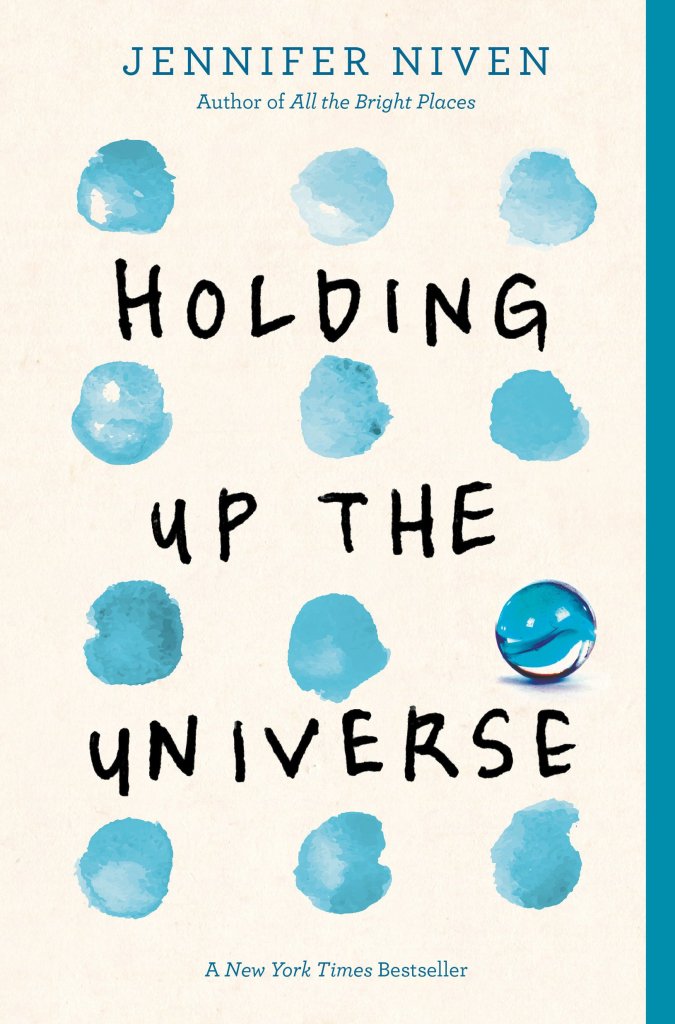
Author of All the Bright Places, Jennifer Niven, later published a book called Holding Up the Universe.
Holding Up the Universe is written from both Jack’s perspective, a popular kid with a secret, and Libby, who has been homeschooled since she developed a binge eating disorder to cope with her mother’s death.
When Libby finds the courage to go back to public school, she finds herself tangled up in an incident with Jack. Their two worlds collide creating an understanding between the two of them that doesn’t make sense to anyone else.
The characters seem to come alive in this book, allowing you to empathize for them and the mental struggles they face. The book will have you laughing and even tearing up at some points.
Throughout the novel, Jennifer Niven provides a unique perspective on fat shaming, bullying, living with secret, and love. I recommend this book to anyone who needs the message to love yourself as you are, because no matter what you look like or where you’ve been in the past, you deserve it.
My favorite part of the book was the monologue at the end, it pulls the whole thing together into a wonderful romance and sets it apart for other books I’ve read.
Every Last Word by Tamara Ireland Stone is a well written book about OCD, high school friendships, love, and forgiveness.
The protagonist, Samantha (Sam) McAllister, is part of the popular group at school. Though she has been best friends with the group since they were little girls, she feels that she does not fit in anymore.
As a result, Sam works hard to hide her obsessive compulsions and attempts to navigate away from her previous circle. In doing so, she meets a girl named Caroline who introduces her to a secret poetry club at the school.
This opens doors to a part of Sam that she never knew existed and allows her to eventually break free from the everyday toxicity she was experiencing, however, her past is still evident in her new life. Sam seeks forgiveness and yearns to belong somewhere.
From a mental health perspective, it has a potentially triggering yet refreshing view on therapy, medication, and healthy family support.
The way the loose ends are tied up by the end made this book one of my all-time favorites. When a friend asks what they should read next, this is my go-to recommendation.











































 The Mustang Post