Category Archives: Arts & Entertainment

ALSO TRY TERRARIA

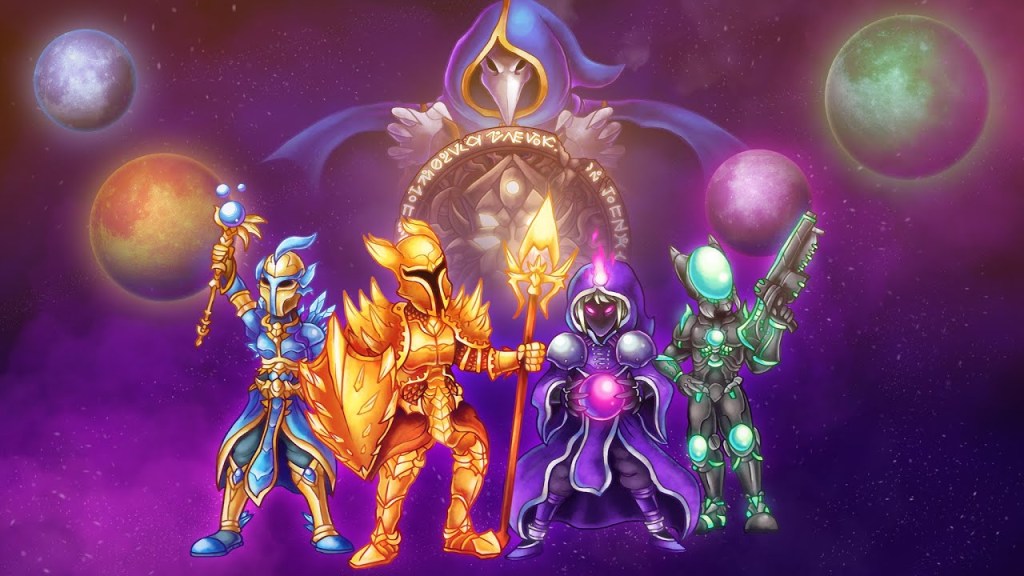
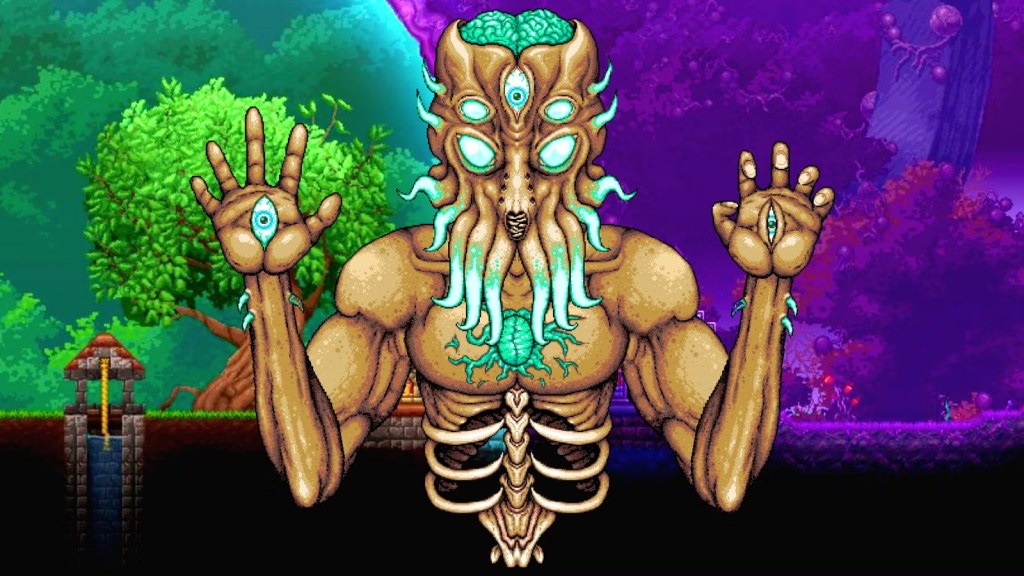
Terraria is a colorful and creative 2D sandbox game developed by Re-Logic that has captured the attention of players around the world since its release in 2011. At its core, the game is about exploration, creativity, and adventure, all wrapped together in a vibrant pixel-art style. While it may look simple at first glance, Terraria offers a deep and rewarding experience that continues to grow as players spend more time in its world. From the moment a new world is generated, players are placed into a lively environment full of possibilities, where every tree, cave, and mountain can be explored and transformed.

The world of Terraria is filled with a wide range of colorful biomes, each with its own unique look and challenges. Players might begin in a peaceful forest with bright green trees and open skies, but as they travel farther, they can discover glowing underground caves filled with sparkling crystals, deserts with shifting sands, or even dangerous corrupted lands with dark purple tones and eerie enemies. These environments are not only visually interesting but also important for gameplay, as each biome contains different materials and resources. Exploring these areas encourages curiosity and rewards players with new crafting opportunities, making every journey feel exciting and worthwhile.

Building and crafting are some of the most important parts of the game, allowing players to shape the world around them. Using materials gathered from the environment, such as wood, stone, and ores, players can create tools, weapons, and structures. Some may choose to build small, cozy houses, while others might design large castles or detailed underground bases. The game also includes non-playable characters, known as NPCs, who can move into player-built homes and offer helpful items or services. This adds another layer of creativity and purpose to building, as players are encouraged to design functional and attractive spaces for their growing community.

In addition to its creative elements, Terraria is also known for its action and combat. As players progress, they encounter a variety of enemies that become more challenging over time. The game features many powerful bosses, each with unique attack patterns and abilities that require careful planning and strategy to defeat. These battles are often intense and rewarding, as defeating a boss unlocks new items, abilities, and areas to explore. This balance between creativity and challenge keeps the gameplay engaging and ensures that there is always something new to work toward.

Another reason Terraria remains popular is its ability to appeal to different types of players. Beginners can enjoy simple exploration and building at their own pace, while more experienced players can focus on mastering combat, collecting rare items, or completing difficult challenges. The game also supports multiplayer, allowing friends to work together, build shared worlds, and take on tough enemies as a team. Over the years, updates from Re-Logic have added even more content, expanding the game and keeping it fresh for both new and returning players.

Overall, Terraria stands out as a game that combines creativity, exploration, and action into one colorful and exciting experience. Its detailed world, filled with different environments and endless possibilities, allows players to express themselves while also challenging their skills. Whether someone is building their dream home, exploring deep underground caves, or battling powerful bosses, the game offers a sense of adventure that is both fun and memorable. This combination of features has helped Terraria remain a beloved title in the gaming world, proving that even a simple-looking game can provide a rich and lasting experience.

Crossfade Chronicles 2

In part one, I looked over Crossfades’ first two albums, and how the second strayed somewhat heavily away from what made me fall in love with the band. It would seem that I wasn’t the only one disillusioned with the band’s second album, Falling Away.

After the bombshell success of the first, platinuming with over a million records sold; the disappointing sales figures of the second, only selling about 200,000 copies, caused Columbia Records to drop Crossfade.

Lead singer Ed Sloan said he found himself in a depression, a darker place that seems to have helped his artistic intent. He felt abandoned in a way, after being on top of the world with their first album.

“Coming off the success of the first record and our way after the second album hit me hard [. . .] music had always been my escape, but then music became my enemy. I shut down as a songwriter and, actually, pretty much as a human being,” Isthmus reported.

They released We All Bleed independently, which meant no message to push or deadlines to rush for, and you can feel it right away in the composition of the first track. Each song is more willing to let the listener create an interpretation and spiral into themselves thinking about what was just sung. The bigger spaces between the singing parts also adds to this small but present feeling of superiority, it takes you back to the first album’s strives’ for more. It also makes the band feel more comfortable with their instruments, they don’t need to sing all the time for it to sound good, and that’s great. But this time around the conflict isn’t always as easy to nail down. It’s still a man struggling to find or become something he may not fully understand, but now with an air of wisdom, the burns of old failures are very palpable in some of the songs.

We All Bleed moves on from the girl of the second album and roughs the finely cut edges of the first to create something that is still trucking along even after all the self-medicating and personal pity parties. In less metaphorical terms, there aren’t any tracks I’d skip on repeat listenings. There’s stuff more articulate, angrier, and energizing than the first, while still letting you think like the second allowed, without the relatively boring and same-y pitfalls the second fell into. The sound mixing of Les Hall is unbelievably good at times, I recommend listening to this album with a proper sound system if you can. And Ed definitely upped his shredding game, it makes you feel heavenly sometimes, like in Suffocate.

Like others have said, it wasn’t going to be the album to change the face of music, but it was more than worth what it was trying to be.

Meet the Basement Yard

By: Adrianna Raile

The Basement Yard is a comedy podcast created by Joe Santagato in 2015. Over the years, he had many of his friends talking with him about random ideas, finding comedy in events in the world, and their lives. The first episode was published on YouTube February 12th, 2018, “Joe Santagato & Frank on Logan Paul’s Return”, running for only 4:38.

As the years went by, his brother-in-law Danny was a regular guest as well. Around 2021, the 253rd episode became the turning point for Joe where he decided the only regular guest he will have would be his best friend, Frank Alvarez.

Now, in 2026, their latest episodes consist of Joe, Frank, and Antonio Prisco who is their videographer and a very close friend to the boys. The newest episode was named, “Protect Punch The Monkey At All Costs | The Basement Yard #546”. In this episode, they talk about mildly inappropriate topics until getting to the big idea being the need to protect Punch the Monkey, known for being a heavily bullied monkey with a stuffed monkey he carries around for support.

Aside from their episodes on YouTube, they have exclusive episodes on Patreon that come out a week prior, as well as episodes that don’t air on YouTube. The boys also go on tour around the world, meet fans, and describe their adventures when they get back!

If you are into best friends turning their lives into comedy, the Basement Yard is the podcast for you.

UPPER LEVEL EXHIBITION

From Ms. Murphy and Ms. Hopper

Sheyenne High School art teachers invite you to second annual Upper-Level Exhibition on Tuesday, May 19th from 4:00-6:30 in the theater lobby.

Sheyenne students spend a semester developing a body of work based on a theme or technical approach and this reception is a celebration for them, their families and all of you. We will be curating the exhibition beginning Friday, May 15th and should be finished by Monday the 18th. If you can’t make it to the reception, feel free to stop by and see the work during the day.

Artist Spotlight

By: Allison Ambuehl

A talented young artist who attends Sheyenne High School, Allison Ambuehl has stunned her fellow students once again with her newly released collection of drawings! She is so incredibly gifted that when a survey was passed around among students about who is the best artist, she won by a landslide.

I had the chance to interview this blossoming young artist, and here is some of what she had to say. “I have been creating art since childhood; I have been going to drawing & painting classes since I was six after my parent recognized my potential with art. Although I love all forms of art, I specialize in sketching and drawing. Sketches are my favorite things to create, and I believe I’ve really developed an art style that is unique to me and I am proud of.”

Outside of being a teenage prodigy, I asked Allison what she does besides working on her art, and she had a surprisingly humble response, “Hm… honestly, I’m just a normal person, I hangout with friends, go to school, and work.” She later expanded on that and explained that she also volunteers, bakes, and reads.

To conclude our interview, I asked her one final question, why art? What drives you to create? She said, “Art gives me freedom through expression, I can draw whatever I want, when I want. It’s completely up to me.”

Allison Ambuehl: Self Portrait
Digital Illustration: Sketchbook
Allison was inspired while gazing in the mirror for nearly an hour. After that hour, she sat at her desk and created what you see above over the course of three weeks.
Allison Ambuehl: Family
Digital Illustration: Sketchbook
Allison was inspired while on a walk in a local park when she saw a happy family. Among other things, she was inspired by herself.
Allison Ambuehl: Sunflower
Digital Illustration: Sketchbook
Allison drew this yellow flower because it remined her of her hair.

The Evolution of Graphics

By: Emmitt Miller

Computer graphics have changed enormously since the earliest days of computing. What started as simple dots and lines on primitive screens has grown into detailed digital worlds that can look almost identical to real life. Today, graphics power video games, animated films, virtual reality, architecture visualizations, and even medical research. The evolution of graphics is closely tied to the growth of computing power and human creativity. As computers became faster and more capable, artists, programmers, and engineers found new ways to turn raw processing power into images that are more immersive, realistic, and expressive.

The first computer graphics appeared in the mid-20th century when computers were enormous machines used mainly by scientists and universities. Early displays were extremely limited and could only show basic shapes or lines on a monochrome screen. One major milestone was the program Sketchpad, created in 1962 by computer scientist Ivan Sutherland. Sketchpad allowed users to draw shapes directly on a screen using a light pen, which was revolutionary at the time. Instead of simply printing numbers or text, computers could now display interactive visuals. In those early years, many systems used vector graphics, where lines were drawn between specific points rather than forming images from pixels. While simple by modern standards, these systems introduced the idea that computers could be used as visual tools rather than just calculating machines.

As technology improved during the 1970s and 1980s, raster graphics began replacing vector displays. Raster graphics use a grid of tiny pixels to build images, which allowed for more complex visuals and color displays. This change helped launch the early video game industry and made graphics accessible to everyday computer users. Early arcade games showed how engaging even simple visuals could be. Players controlled paddles, spaceships, or characters made of only a few shapes, yet the games felt exciting and interactive. Home computers soon followed, bringing colorful graphics into people’s homes. Although the resolution and color palettes were very limited, these systems introduced sprites, scrolling backgrounds, and basic animations that made digital worlds feel alive.

The 1990s marked one of the most important turning points in graphics history with the rise of real-time 3D graphics. Instead of flat images, developers began building environments using polygons that formed three-dimensional objects. Games became more immersive as players could explore spaces that appeared to have depth and perspective. At the same time, specialized graphics hardware began appearing in personal computers. These graphics processing units, or GPUs, were designed specifically to handle the complex math needed to render images quickly. Companies such as NVIDIA and ATI helped push this technology forward, making it possible for home computers to display smoother animations, detailed textures, and more complex lighting effects. For the first time, digital environments started to feel like believable spaces rather than simple pictures on a screen.

During the 2000s and 2010s, graphics technology advanced at an incredible pace. GPUs became extremely powerful, allowing developers to simulate realistic lighting, shadows, reflections, and physical effects. Techniques such as shader programming and high dynamic range lighting made digital scenes richer and more detailed. Computer graphics also expanded far beyond video games. The film industry began using advanced computer-generated imagery to create entire characters and environments that blended seamlessly with live action. Architects used rendering software to visualize buildings before construction, while scientists used graphics to explore complex data and simulations.

One of the most exciting recent developments has been the introduction of real-time ray tracing. Ray tracing simulates how light behaves in the real world, calculating how rays bounce off surfaces, pass through glass, and reflect in mirrors. In the past, this technique required enormous computing power and could take hours to render a single image. Today, modern graphics cards can perform these calculations instantly, creating reflections and lighting that look far more natural and realistic than older techniques.

Looking toward the future, graphics technology will likely continue evolving in surprising ways. Artificial intelligence is already starting to assist in creating images, textures, and animations. AI tools can upscale lower-resolution graphics, fill in missing details, and even generate entire environments. Another major area of development is virtual reality and augmented reality, which aim to place users directly inside digital worlds.These technologies require extremely fast and realistic graphics to feel convincing, pushing hardware and software to new limits.

Researchers are also exploring new approaches such as neural rendering, where machine learning models help generate images instead of traditional rendering pipelines. This could dramatically reduce the computing power needed to create realistic scenes. Combined with advances in cloud computing and future hardware, these technologies could allow massive shared virtual environments or simulations that are far more detailed than anything possible today.

From the earliest glowing lines on a black screen to the breathtaking digital worlds we see today, the evolution of computer graphics has been driven by curiosity, creativity, and technological progress. Each new breakthrough has expanded what artists and developers can create, turning computers into powerful tools for storytelling and exploration. As new technologies continue to develop, the graphics of the future will likely become even more immersive, intelligent, and visually stunning than we can currently imagine.

The 68th Grammy Awards

By: Mateo Landayan

The 68th Annual Grammy Awards in Los Angeles was a night full of standout performances and recognition as music’s biggest night celebrated mainstream stars. Held at the Crypto.com Arena on February 1, the ceremony had commercial hits, critical favorites, and cultural moments that resonated beyond the stage.

 Among the most talked-about winners was “Debí Tirar Más Fotos” by Bad Bunny, which made history as the first primarily Spanish-language album to win Album of the Year. Delivering his acceptance speech mostly in Spanish, the Puerto Rican artist showed cultural pride and the universality of music. Broadcasted to millions, it focused on how Latino audiences shape the industry while often being sidelined in bigger, national matters.

 In the Song of the Year category, Billie Eilish took home the trophy for “Wildflower” after being nominated for a second year. Meanwhile, Best New Artist went to British singer-songwriter Olivia Dean. Icelandic-Chinese singer-songwriter Laufey won her second career Grammy for Best Traditional Pop Vocal Album for “A Matter of Time.” She previously won the same award in 2024 for “Bewitched”, making her a two-time winner in this category.  

The show itself was filled with memorable performances from a range of genres. Pop and rock icons like Lady Gaga, Rosé, Sabrina Carpenter, Justin Bieber, Tyler, the Creator, and Bruno Mars lit up the stage. Notably, Justin Bieber’s raw performance of “Yukon,” played with just a loop pedal and guitar while in his underwear, stood out for its honesty and minimal staging.  

 Beyond the major categories, the awards highlighted diversity, from Turningstile’s Best Rock Album win to Tyla’s Best African Music Performance. The ceremony also featured emotional and political moments. Several acceptance speeches addressed immigration policy, social justice movements, and cultural identity. The Grammys, once criticized for avoiding controversy, allowed space for those perspectives. That space showed bigger shifts in public expectations. Audiences now look to celebrities not only for entertainment, but for engagement with the world around them. 

2026 Is The New 2016

The Return of the “2016” Aesthetic
When the clock hit midnight on January 1, 2026, people didn’t post “new year, new me.” Instead, the phrase “2026 is the new 2016” began flooding timelines in apps like Instagram and snapchat.

Post were filled with old Instagram-style filters, blurry pictures with flash, random selfies, and silly videos without worrying about aesthetics. It felt like the internet had decided to rewind.


From skinny jeans and chokers to messy buns and Snapchat filters, Gen Z is reviving the 2016 style that once defined 2016 . This aesthetic feels so nostalgic back when time where photos felt didnt feel like a performance.

2016 Fashion

Why Is Everyone Looking Back?
The internet today moves fast. Trends last only a week. Feeds are carefully curated. Everything feels so intentional that it doesnt feel real. In comparison, 2016 feels messy and maybe that’s the point.

Back then, people posted without overthinking every detail. Not every photo was aesthetic, and not every video was optimized for engagement. It wasn’t perfect, but it felt more genuine. The revival isn’t really about trends. Instead, its about remembering a point in time when social media felt more real.

Clairo: Rise to Fame

By: Allison Ambuehl

Claire Cottrill, famously known as Clairo, is a multitalented indie/alternative music artist who is known for her intimate lyrics and gentle sound. She is a singer who needs no introduction to the younger generation, as she has been incredibly popular on social media apps such as TikTok and Instagram for almost a decade. Most people know of Clairo and her music, but how much do we know about Claire Cottrill and how she got to be the artist she is today?

Claire Cottrill was born on August 18th, 1998, in Atlanta, Georgia, United States of America. Although she was born in Atlanta, Clario and her family then moved to Washington and stayed for three years, but eventually moved to Carlisle, Massachusetts where she spent the rest of her childhood.

Her parents are George and Allie Cottrill, her father is a prominent marketing executive for popular brands such as Starbucks, Coco-Cola, and Converse. Clairo is widely considered a ‘nepo-baby’ due to her father’s industry connections, but part of her brand is being a ‘self-made’ artist, she has addressed these concerns by confirming her father’s support has been helpful towards her career, so it’s up for your interpretation. Clairo describes her upbringing as supportive and constantly having creative outlets throughout her childhood, contributing to her love for making music.

Her exposure to music throughout her childhood led her to start posting her music on social media platforms at age 13, and she released her first official demo in 2014, called ‘Do U Wanna Fall in Love?’ under her real name. Her first viral hit she released was in August 2017, called ‘Pretty Girl’ after graduating from Concord-Carlisle high school. This song was so popular as it was recorded with her raw vocals in her bedroom, which resonated with a lot of viewers because of the raw and acoustic feel. She then went on to attend Syracuse University, while pursuing music full-time.

She continued to release music, growing her already established fanbase and released albums such as ‘Immunity’ in 2019, which included the song ‘Bags’ that won the best song of the year in 2019. She later released ‘Sling’ in 2021 which debuted in the top 20 of the US Billboard 200. Her most recent album titled ‘Charm’, was self-released in 2024 and nominated for a grammy in the Best Alternitive Music Album category. Clario’s success has been widely criticized due to her industry connections, however that doesn’t change the fact that she is a unique artist with a beautiful voice and the ability to connect with her fans.

KING OF SLOTH: A SLOWBURN ROMANCE

By: Savannah Swanson

King of Sloth is about Xavier Castillo who is a heir to a multi-billionaire who is known for his charm, wealth, and “playboy” personality and Sloane Kensington who is publicist who is known for her strict act and impeccable composure.

Xavier Castillo, charming, easy going, and a wealthy “playboy” who parties till the sunrises and avoids his responsibilities his father expects of him. But throughout the book we start to see the negative impacts of his actions and how his fathers’ reactions to his bad behavior start to get to him.

Sloane Kensington, ambitious, punctual, and known as the “Ice Queen” who barely shows emotion to her clients. As Xavier publicist she is constantly picking up his mess but as she struggles internally with her own issues and outside problems start to infer with her work her “Ice Queen” fade starts to melt.

In the beginning chapters we see the pair barely exchange a few words other than business meetings, and as Xavier continues to push back his responsibilities and put his family reputation at stake, a family crisis happens.

As Xavier is forced into his responsibilities as his father is dying he starts to consult in Sloane. He enjoys trying to crack her “Ice Queen” act, as they attend an event together and their forced proximity starts to become unprofessional.

Sloane struggles to keep up her professional act from Xavier flirtatious charm and banter. Their attraction to each other grows but its only time until someone notices, which could ruin Sloane career.

But as Xaviers father passes away he inherits a shocking amount of money, but he must become CEO by his 30th birthday which is only 6 months away. He notices a loophole, he doesn’t have to become CEO of his father’s company, he just has to become CEO of something.

With all the money he inherits he starts his own business called “The Vault” which is a nightclub. Sloane helps tremendously with starting the business her internal walls that she put up begin to fall.

But as the pressures of the business wear on Xavier, making him start to act out. Something happened; someone tried to sabotage his grad opening by sending the place on fire. Most of his work that they had worked for months was demolished.

As Xavier didn’t even want to finish the place, Sloane gave him some encouraging words and made him sure he couldn’t give up. With a heavy heart, Xavier starts to rebuild fast enough hoping to make the deadline.

Many hours and many sleepless nights, the grand opening finally arrives. As Sloane and Xaviers open the nightclub together the business takes off right away. Xavier finally helped Sloane out of her shell and softened her in a way.

If you want to read more into Sloane and Xaviers relationship you can find these books at your local bookstores and grocery stores.